




Due to the activities of the Parliamentary Group on the Decriminalization of Marijuana, the debate on the decriminalization and legalization of recreational cannabis has returned to Poland. The Group plans to present a draft act that would decriminalize the possession of up to 15 grams of marijuana. Current research on drug policy indicates that, from a harm-reduction perspective, the most effective solution is the legalization of this substance.
Decriminalization is therefore a step in the right direction, but a broader process of reform is necessary. Decriminalization refers merely to the removal of penalties for possession, whereas decriminalization involves removing possession from the catalogue of criminal offences. These terms are often used interchangeably, and the same approach is adopted in this text. Both decriminalization and decriminalization fall well short of legalization, understood as allowing marijuana to be traded legally.
This paper analyses the current situation regarding the consumption of recreational marijuana and the enforcement of penalties for its possession in Poland. As it turns out, the state is unable to effectively enforce the ban on marijuana possession. The paper also discusses the effects of prohibition. Finally, it reviews the literature on the consequences of the decriminalization or legalization of marijuana. Arguments in favor of moving in this direction extend beyond individual freedom of choice and include positive effects on public safety, public health, and public finances.
Poles Smoke Cannabis Anyway!
In Poland, marijuana is prohibited under the Act on Counteracting Drug Addiction, which criminalizes the possession, cultivation, and sale of marijuana for recreational purposes. Since 2017, medical marijuana has been permitted and is available by prescription. Poland’s “war on drugs,” including marijuana, as in many other countries, has proven costly and ineffective. Despite the ban, Poles continue to use cannabis for recreational purposes.
According to the European Union Drug Agency (EUDA), a significant share of Polish society consumes marijuana (Figure 1). In 2024, 19.1% of adult Poles aged 15–64 and 25.2% of young Poles aged 15–34 reported having used marijuana at least once in their lifetime (European Union Drugs Agency 2025a) (Figure 1). In the same year, 10.3% of young people reported using marijuana in the previous 12 months, compared to 7.8% in 2018.
Figure 1. Share of Poles Reporting Marijuana Use in Their Lifetime
Source: FOR’s elaboration based on EUDA data
Despite the upward trend, Poland does not rank among the European countries with the highest levels of marijuana consumption (Figure 2). It should be noted, however, that survey-based studies suffer from a significant limitation: respondents may be reluctant to admit to marijuana use for legal or cultural reasons. Interestingly, in countries where marijuana is illegal, such as France or Denmark, a relatively large share of respondents reported having used marijuana. By contrast, in some countries with more liberal drug policies, such as Portugal and Austria, the reported levels are similar to those observed in Poland.
Figure 2. Share of the Population Reporting Lifetime Marijuana Use in the Most Recent Available EUDA Survey Year

Source: FOR’s elaboration based on EUDA data
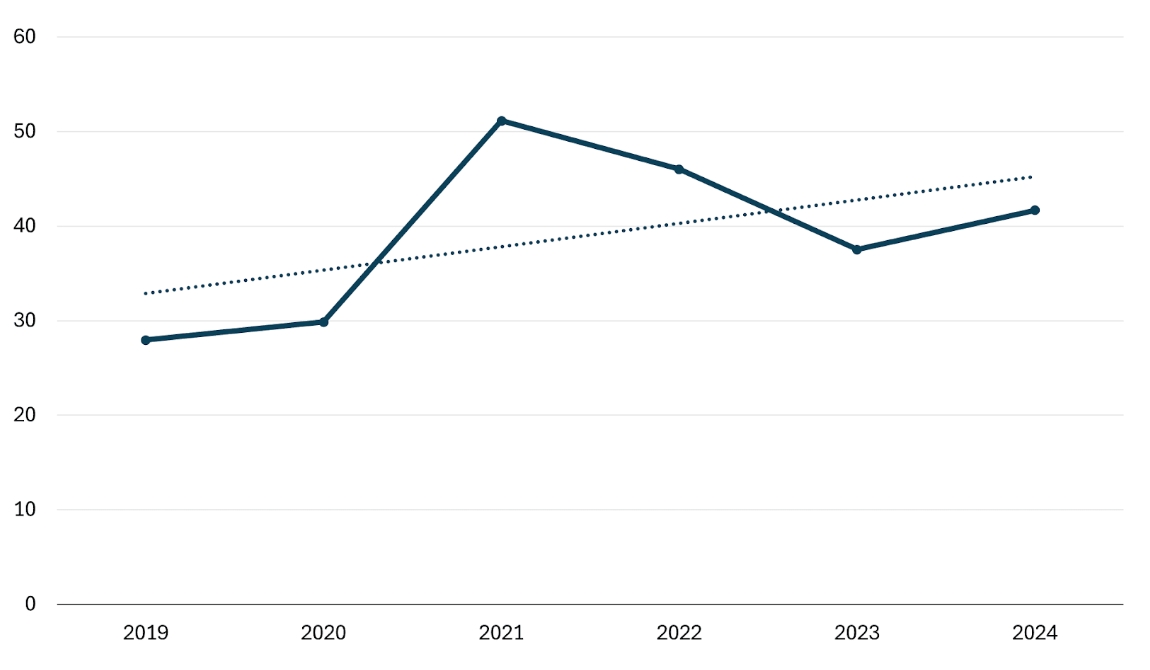
EUDA also publishes studies on the presence of drug residues in wastewater (European Union Drugs Agency 2025b). In the case of marijuana, the indicator analyzed is THC-COOH, and results are expressed as the number of milligrams of metabolites per 1,000 people per day. This approach also has its limitations: it is difficult to estimate the impact of so-called “drug tourism” and the medical use of marijuana on the results. In the international data published by EUDA, only one Polish city is included—Kraków. For this city, the presence of marijuana metabolites shows an upward trend (Figure 3).
Interestingly, this method also makes it possible to analyze when specific substances are consumed. In the cities studied, substances such as MDMA or cocaine are consumed mainly during the weekend—this is when the concentration of their metabolites in wastewater is highest and exceeds the weekly average (Wantuch, Baurmann, and Khazalová 2024). In the case of marijuana, consumption is relatively stable throughout the week. This pattern has also emerged in Kraków: while in 2020 and 2022 marijuana was used mainly as a “party drug,” in 2023 and 2024 it was consumed to a similar extent on weekdays as well. This points to a predominantly recreational pattern of use and may indicate a reduction in risky behaviors during social events, due to lower exposure to other substances, alcohol in particular.
Figure 3. Presence of Marijuana Metabolites per 1,000 Residents per Day (Weekly Average) in Kraków
Source: FOR’s elaboration based on EUDA data
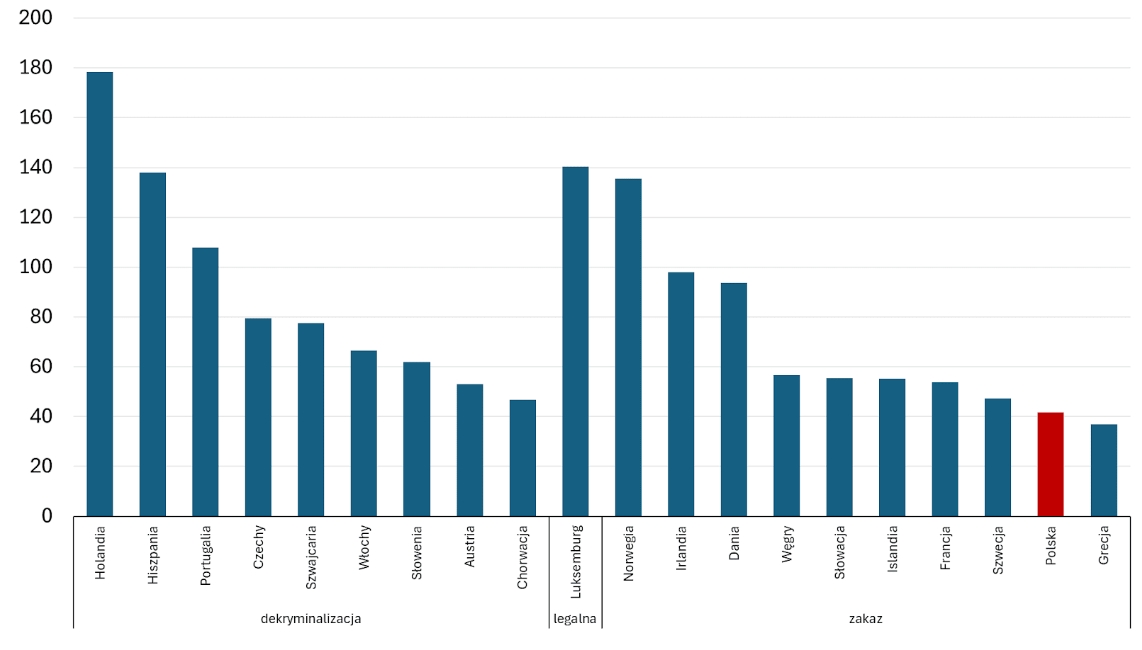
The results of wastewater analyses point to diverse consumption patterns (Figure 4). Cities in countries with more liberal drug policies, such as Slovenia, Austria, or Croatia, exhibit levels of marijuana metabolites similar to those observed in Kraków. This suggests that the liberalization of drug policy does not necessarily lead to an increase in marijuana consumption.
Figure 4. Presence of Marijuana Metabolites per 1,000 Residents per Day in Selected Countries in the Most Recent Survey Year
Source: FOR’s elaboration based on EUDA data
There is also another dimension of recreational marijuana consumption: medical marijuana. Some users likely obtain cannabis via prescription despite not needing it for medical purposes. This is a consequence of the lack of access to legal recreational marijuana—people choose a less risky alternative. However, it is difficult to estimate what share of medical marijuana consumption is in fact recreational. In 2023, as many as 276,807 prescriptions were issued for over 4.6 tones of medical marijuana, representing a significant increase compared to previous years.
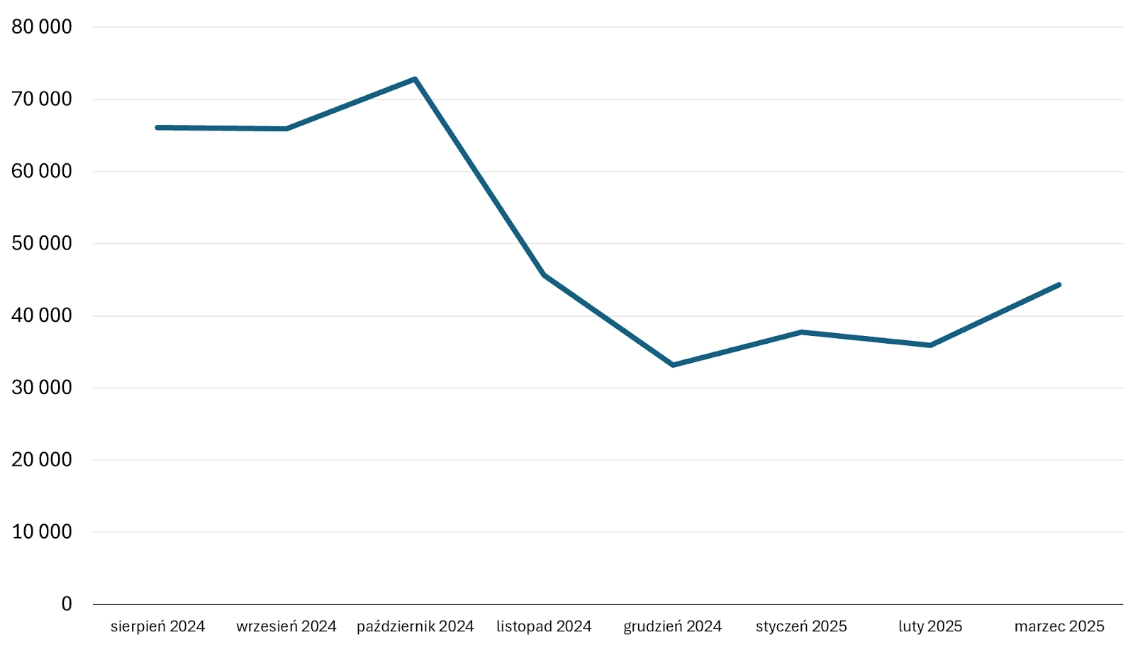
Last year, cannabis was indirectly affected by the moral panic–driven “war on opioids” particularly fentanyl. The Ministry of Health launched a campaign against so-called “prescription mills” that issue remote prescriptions for psychoactive substances. As a result of this campaign, the number of prescriptions for fentanyl, oxycodone, or morphine did not decline significantly. By contrast, the number of prescriptions for medical marijuana fell by half.
Figure 5. Number of Prescriptions for Medical Marijuana by Month
Source: FOR’s elaboration based on data from the e-Health Centre and Hemp & Health
Ban Burdens Law Enforcement and Courts
As the data show, a substantial share of Polish society consumes marijuana recreationally. This alone demonstrates that “counteracting drug addiction” in Poland is ineffective. Nevertheless, maintaining the current approach entails real costs – police officers and Border Guard personnel, prosecutors, and judges are required to take action against producers, dealers, and users of marijuana. Law enforcement activities must be undertaken even when only small quantities of marijuana are detected, unnecessarily diverting resources from actions that are more productive from a public safety perspective.
According to a study by the Institute of Public Affairs, the costs of the war on drugs amounted to 80 million PLN in 2008 and required more than 200,000 eight-hour workdays (Kuźmicz, Mielecka-Kubień, and Wiszejko-Wierzbicka 2009). Assuming these expenditures have remained constant relative to GDP, they can be estimated at over 220 million PLN in 2024. To what extent are these costs justified in light of the evidence on the effectiveness of prohibition?
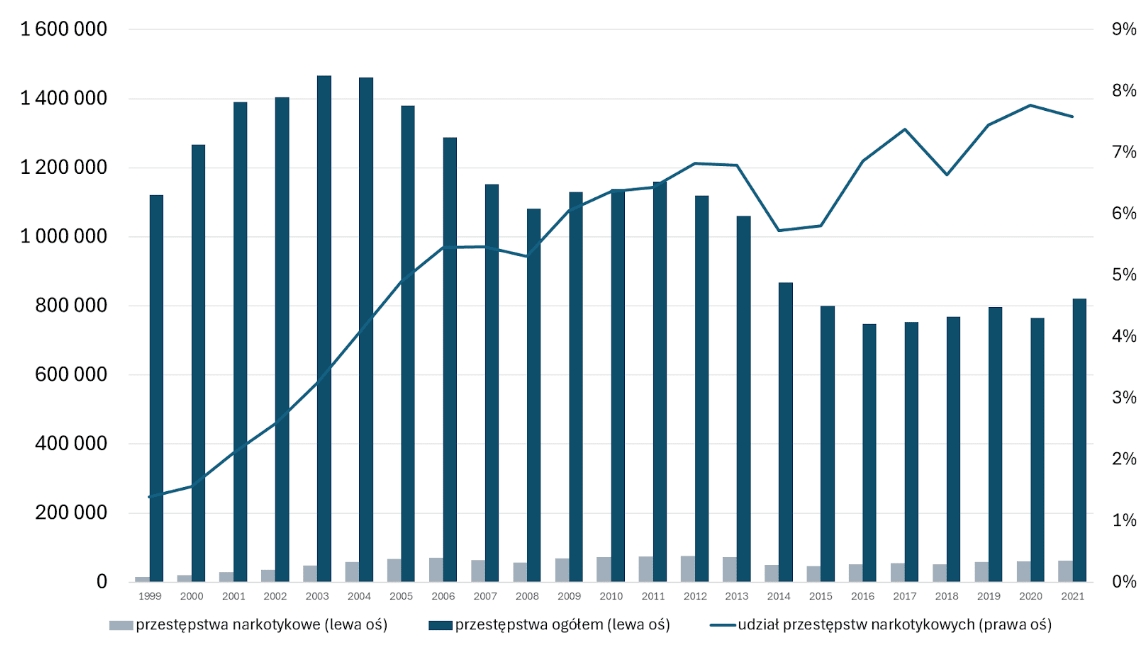
Between 1999 and 2021, the total number of recorded crimes fell by 27%, representing a major success of Poland’s political and economic transformation and clear evidence of an improvement in state performance. At the same time, the number of recorded drug-related offences increased by as much as 298%. The share of drug offences in total crime has been rising (Figure 6). This points to the profound ineffectiveness of the current legal framework—under conditions of declining overall crime, one would expect drug-related crime to decrease as well.
Unfortunately, current statistics identifying which substances are involved in these offences are not available. In 2011, 70% of drug-related offences concerned marijuana. If this pattern still holds, the police are largely engaged in dealing with a substance that is relatively low-harm yet widely used.
Figure 6. Criminal Offences in Poland, 1999–2021
Source: FOR’s elaboration based on Police data
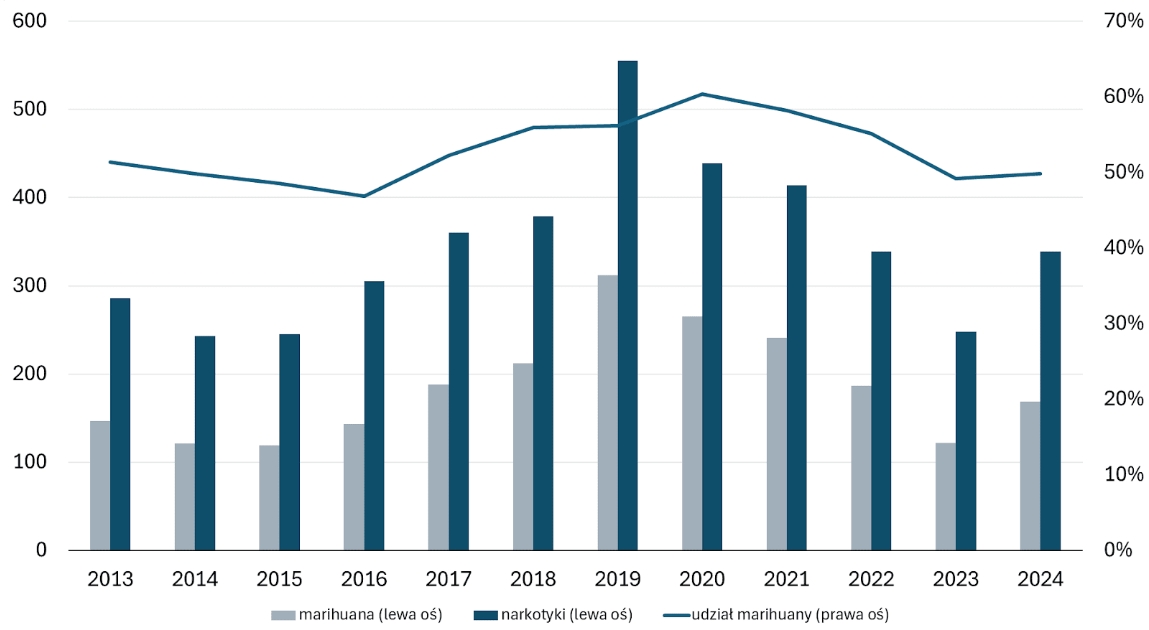
As noted above, the Police currently does not publish detailed data on the types of substances involved or the quantities seized. In this respect, information published by the Border Guard on detected smuggling cases may be helpful. Last year, the Border Guard reported detecting 339 drug smuggling attempts, of which 169—almost half—were related to marijuana (Figure 7). A similar pattern was observed in 2013–2024, when marijuana accounted on average for around 53% of all detected drug smuggling cases. This suggests that as much as half of the Border Guard’s anti-drug activities are directed at marijuana rather than at more dangerous substances.
But are these actions in fact aimed at organized crime? In 2013–2024, the median quantity seized did not exceed 5 grams, indicating that a large share of these smuggling cases were intended for personal use. In 2024, there were 16 recorded smuggling incidents involving drugs valued at less than 20 PLN, and the authorities also dealt with an individual carrying 0.016 g of marijuana valued at 80 groszy.
Figure 7. Drug Seizures Recorded by the Border Guard
Source: FOR’s elaboration based on Border Guard data
Figure 8. Median Weight of Detected Marijuana Seizures (grams)

Source: FOR’s elaboration based on Border Guard data
The publicly available data clearly show that, despite the ban, Poles continue to consume marijuana. Undoubtedly, the current regulations primarily affect ordinary consumers. This is often a consequence of the absence of a clear legal definition of a “small quantity,” which has not been specified in the law.
As a result, it is unclear what amount of possessed marijuana may lead to case dismissal and what amount will result in conviction—some individuals may have proceedings dismissed for possessing 10 grams, while others may face penalties for possessing only a trace amount. This problem is recognized not only by users and legal professionals, but also by law enforcement officers themselves. In Poland, the absurdities of prosecuting even very small amounts of marijuana have been highlighted by influencer and police officer Sierżant Bagieta, while in Germany the leader of the police trade union, Andre Schulz, described the ban as purposeless and misguided.
Hidden Costs
Drug prohibition also leads to unintended consequences that are often poorly visible. These include an increase in the potency of psychoactive substances, a decline in quality due to the addition of harmful additives, a rise in crime and prison populations, the brutalization of the police (Sieroń 2021), as well as the development of dangerous and harmful—yet legal—substitutes. These phenomena may also occur in Poland, further worsening the assessment of the current drug policy.
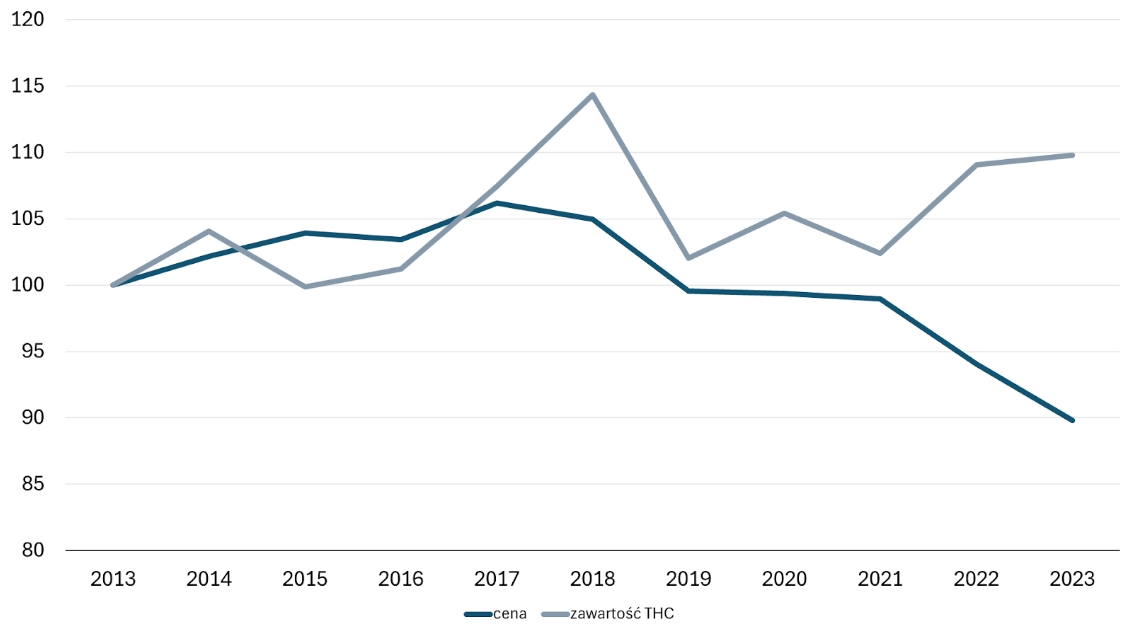
Figure 9. Trends in Marijuana Prices and THC Content (2013 = 100)
Source: FOR’s elaboration based on EUDA data
An increase in the potency of psychoactive substances combined with a decline in quality may lead to overdoses or poisonings. In the case of marijuana, these risks can take the form of adverse effects such as psychotic disorders or memory impairment. Once again, it is difficult to find Poland-specific data; however, conclusions drawn from EUDA estimates are not reassuring. Between 2013 and 2023, the price of marijuana fell by more than 10%, while THC content increased by nearly 10% (Figure 9). This situation is unfavorable for users – it is possible to purchase higher-potency marijuana at a lower price, which increases the risk of adverse effects. An even greater threat to users themselves is the addition of other substances to black-market marijuana. For example, in Canada, high levels of pesticides were detected in samples of illegal marijuana (92% of samples, compared with only 6% in the legal market; Gagnon et al. 2023).
Moreover, the use of synthetic cannabinoids is another serious concern. These substances allow cheaper counterfeit cannabis products to be sold. Synthetic cannabinoids pose significantly higher health risks (including potential damage to the liver and heart) and increase the risk of mental health disorders (Alzu’bi et al. 2024). A study from the United Kingdom suggests that their use as additives may be widespread (Erridge, Hall, and Södergren 2025), exposing marijuana users to substantially greater danger.
Another unintended consequence of restrictive drug policy is an increase in crime. Once again, the scale of this phenomenon is difficult to estimate. As noted by Jerzy Gąsiorowski, drug-related crime is diverse, involving both individual offenders and organized criminal groups (Gąsiorowski 2023). This constitutes yet another problem: drug prohibition creates opportunities for criminal organizations to increase their revenues.
Decriminalization Can Help
In light of these facts—the ineffectiveness of the marijuana ban and the unintended negative consequences of penalization—the conclusion follows that marijuana should not remain prohibited. Full legalization appears to be the most effective solution, as only in this scenario it is possible to exercise greater control over the substances being sold, to the benefit of user safety. Society and policymakers still fear liberalizing drug policy due to concerns about increased consumption and its potential negative consequences. Are these fears justified?
The United States appears to be a particularly suitable setting for studying the effects of changes in drug policy, as some states have liberalized their approach, allowing for comparative analysis. One study examined impacts on youth health, crime, and the frequency of road traffic accidents—precisely the outcomes most often cited by opponents of liberalization. The findings showed that the changes had only a minimal impact on these areas (Dills, Goffard, and Miron 2017). Moreover, another U.S. study finds a negative correlation between decriminalization and crime: states that allow marijuana consumption record fewer property crimes (Jacobs and McCurdy 2024).
In Switzerland, the impact of legal marijuana on consumption patterns was examined through a randomized study in which some participants purchased cannabis from pharmacies, while others obtained it on the black market (Baltes-Flueckiger et al. 2025). The results showed that fewer participants in the legal-access group engaged in excessive use. This study indicates that legal access to marijuana enhances consumer safety.
Summary
The efforts of the Parliamentary Group on the Depenalization of Marijuana are a very positive signal—Poland is in need of a more liberal drug policy. Freedom is what ultimately ensures safety. Decriminalization is undoubtedly a step in the right direction, but it should not be the final one; efforts toward legalization and a broader change in the approach to other psychoactive sub-stances should continue.
For years, a renaissance of cannabis has been happening—scientists are exploring additional ways in which it may be beneficial, while entrepreneurs are using it in construction, the clothing industry, and as a raw material for biomass production. In Poland, companies already operate in the cannabis sector, but they are constrained by regulation. Notably, it was only in 2023 that the first license for cultivation of medical marijuana in Poland was granted. As a result, the costs of a restrictive drug policy are borne not only by users, but also by innovative entrepreneurs. Decriminalization of marijuana is clearly a step in the right direction, but further efforts toward legalization and a rational drug policy are necessary—not only for the benefit of users themselves, but also to support economic development and the advancement of society based on science and innovation.
References
[1] https://x.com/RafalMundry/status/177504349310408736.
[2] P. Kuczak, Ilość recept na medyczną marihuanę spadła o 50% w lutym 2025, March 28 2025, Fakty Konopne, https://faktykonopne.pl/spadek-liczby-recept-medyczna-marihuana-2025/.
[3] Police, Przestępstwa narkotykowe w statystyce policyjnej, policja.pl, October 30 2012, https://statystyka.policja.pl/st/informacje/82014,Przestepstwa-narkotykowe-w-statystyce-policyjnej.html.
[4] A. Olender, Prawnik: Największe umorzenie? Za 12 gramów marihuany. Ale znam też sprawę skazania za 0,1 grama, naTemat, February 9 2022, https://natemat.pl/395289,co-grozi-w-polsce-po-zatrzymaniu-z-marihuana.
[5] Mestosław, Sierżant Bagieta szczerze o pracy w policji, legalizacji i problemach z substancjami | #MamTemat 29, YouTube, November 21 2022, https://www.youtube.com/watch?v=1ew2KiXhAO8.
[6] DW, German Police Body Calls for Cannabis Legalization, February 5 2018, https://www.dw.com/en/cannabis-german-police-union-advocates-legalization/a-42459307.
[7] A. Sieroń, Ekonomia dopalaczy, Instytut Misesa, July 30 2015, https://mises.pl/artykul/sieron-ekonomia-dopalaczy.
[8] Rusin, GIF wydał pierwsze w Polsce zezwolenie na uprawę medycznej marihuany, WeedWeek, January 12 2024, https://www.weedweek.pl/gif-wydal-pierwsze-w-polsce-zezwolenie-na-uprawe-medycznej-marihuany/.
Lectures
Alzu’bi, Ayman, Fatimah Almahasneh, Ramada Khasawneh, Ejlal Abu-El-Rub, Worood Bani Baker, i Raed M. Al-Zoubi. 2024. „The synthetic cannabinoids menace: a review of health risks and toxicity”. European Journal of Medical Research 29(1):49. doi:10.1186/s40001-023-01443-6.
Baltes-Flueckiger, Lavinia, Regine Steinauer, Maximilian Meyer, Adrian Guessoum, Oliver Herrmann, Christoph Felix Mosandl, Jens Kronschnabel, Eva-Maria Pichler, Marc Vogel, i Marc Walter. 2025. „Effects of Legal Access versus Illegal Market Cannabis on Use and Mental Health: A Randomized Controlled Trial”. Addiction. doi:10.1111/add.70080.
Dills, Angela K., Sietse Goffard, i Jeffrey Miron. 2017. „The Effects of Marijuana Liberalizations: Evidence from Monitoring the Future”.
Erridge, Simon, Martin Hall, i Mikael H. Sodergren. 2025. „Prevalence and Patterns of Cannabis Product Adulteration: An Analysis of WEDINOS Data”. Journal of Psychoactive Drugs 1–7. doi:10.1080/02791072.2025.2478087.
European Union Drugs Agency. 2025a. European Drug Report 2025: Trends and Developments,. https://www.euda.europa.eu/publications/european-drug-report/2025_en.
European Union Drugs Agency. 2025b. „Wastewater analysis and drugs — a European multi-city study”. https://www.euda.europa.eu/publications/html/pods/waste-water-analysis_en.
Gagnon, Mathieu, Tyler McRitchie, Kim Montsion, Josée Tully, Michel Blais, Neil Snider, i David R. Blais. 2023. „High levels of pesticides found in illicit cannabis inflorescence compared to licensed samples in Canadian study using expanded 327 pesticides multiresidue method”. Journal of Cannabis Research 5(1):34. doi:10.1186/s42238-023-00200-0.
Gąsiorowski, Jerzy. 2023. „Sprawcy Przestępstw Narkotykowych na Terenie Województwa Śląskiego w Świetle Badań Aktowych”. International Journal of Legal Studies ( IJOLS ) 14(2):131–73. doi:10.5604/01.3001.0054.2704.
Jacobs, Joseph Paul, i Jonathan McCurdy. 2024. „Modern State Marijuana Legislation and its Effect on Crime”. J. Comput. Sci. Coll. 40(3):44.
Kuźmicz, Ewelina, Zofia Mielecka-Kubień, i Dorota Wiszejko-Wierzbicka. 2009. Karanie za posiadanie: artykuł 62 ustawy o przeciwdziałaniu narkomanii: koszty, czas, opinie: raport z badań. Fundacja Instytut Spraw Publicznych.
Sieroń, Arkadiusz. 2021. Katastrofa prohibicji narkotykowej. Wrocław: Instytut Misesa.
Wantuch, Dominika, Corin Baurmann, i Gaby Khazalová. 2024. „Narkotyki w ściekach. «Po pandemii obserwujemy coraz więcej osób z problemem narkotykowym»”. https://biqdata.wyborcza.pl/biqdata/7,159116,30806786,narkotyki-w-sciekach-w-krakowie-wyrazny-wzrost-amfetaminy.html.
Written by Mateusz Michnik.
Continue exploring:
Deepening Divide within Nation: Tactic of Digital Conquest in Hungary
Marijuana Legalization: True Freedom or Just New Form of Control?