


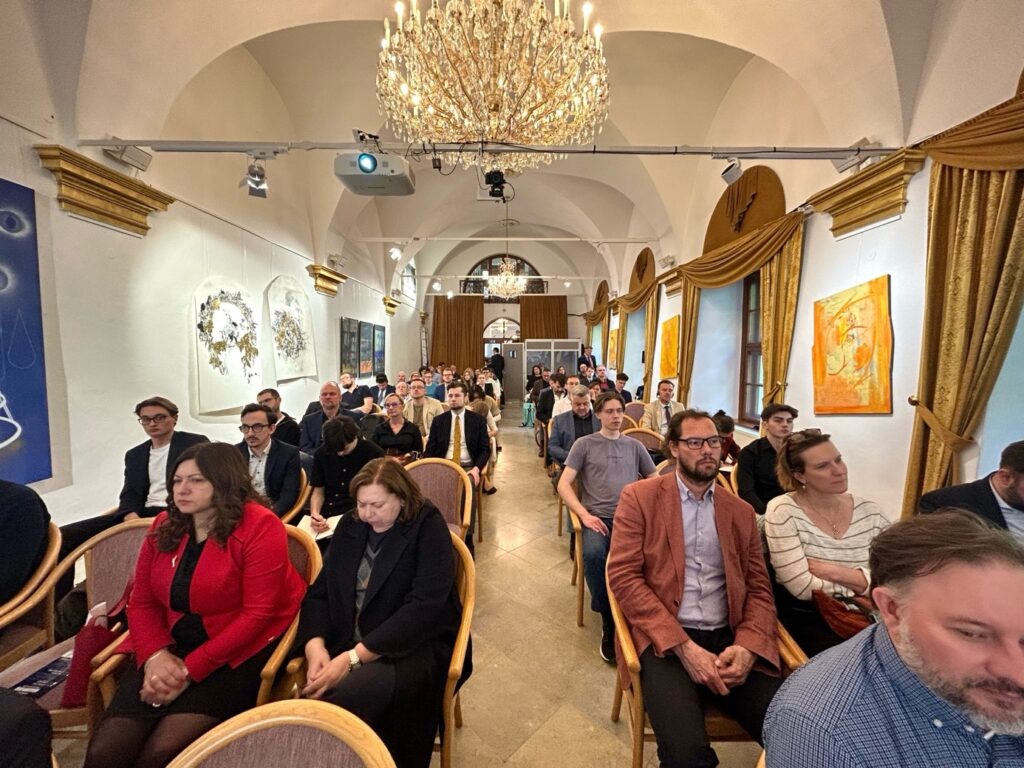
On April 22, 2026, INESS organized an international conference “The 2026 Free Market Road Show” at the Pálffy Palace in Bratislava in cooperaction with the Austrian Economics Center. The title of the conference was “Regulatory Detox – Awakening Dormant Growth.”
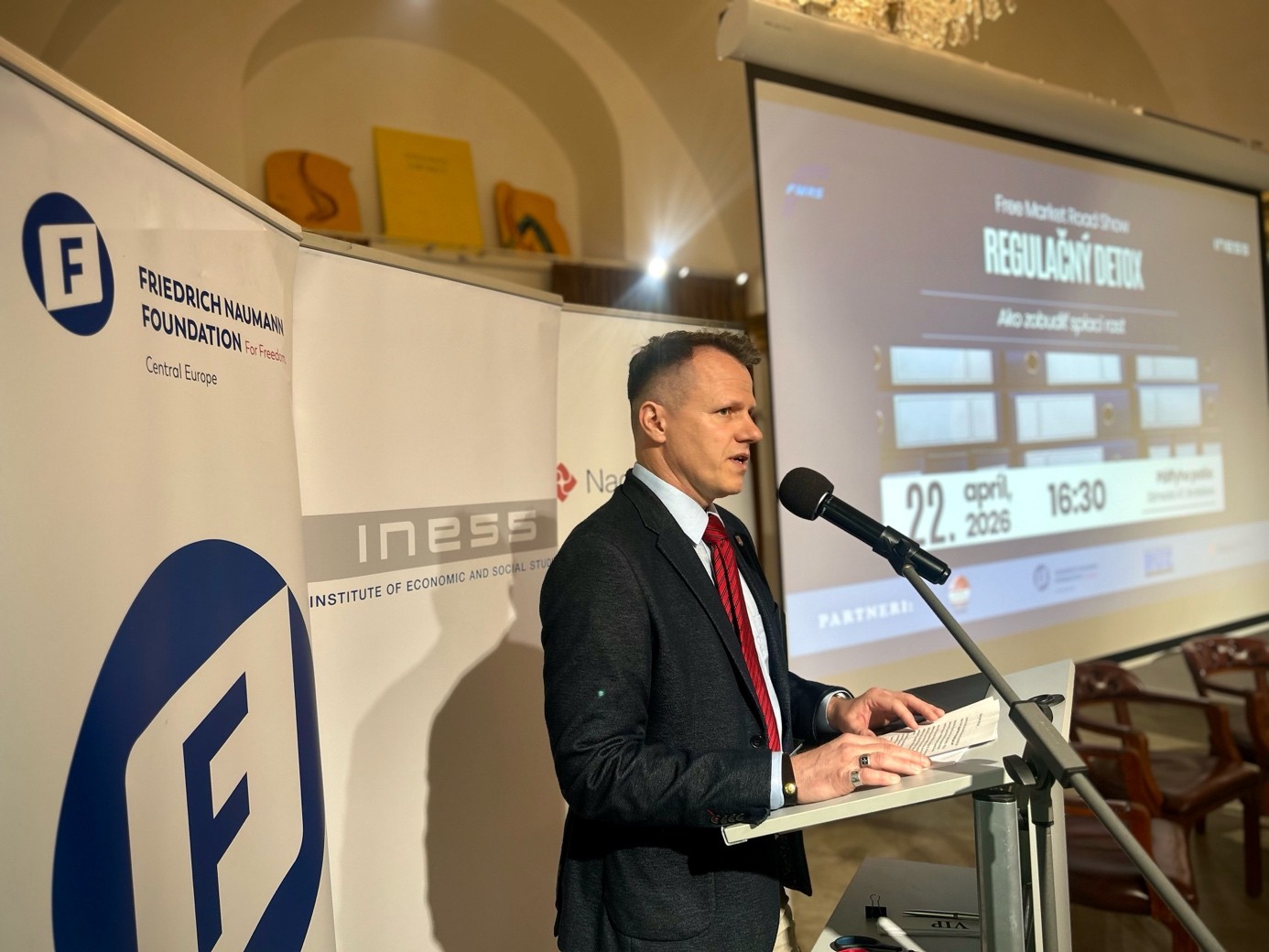
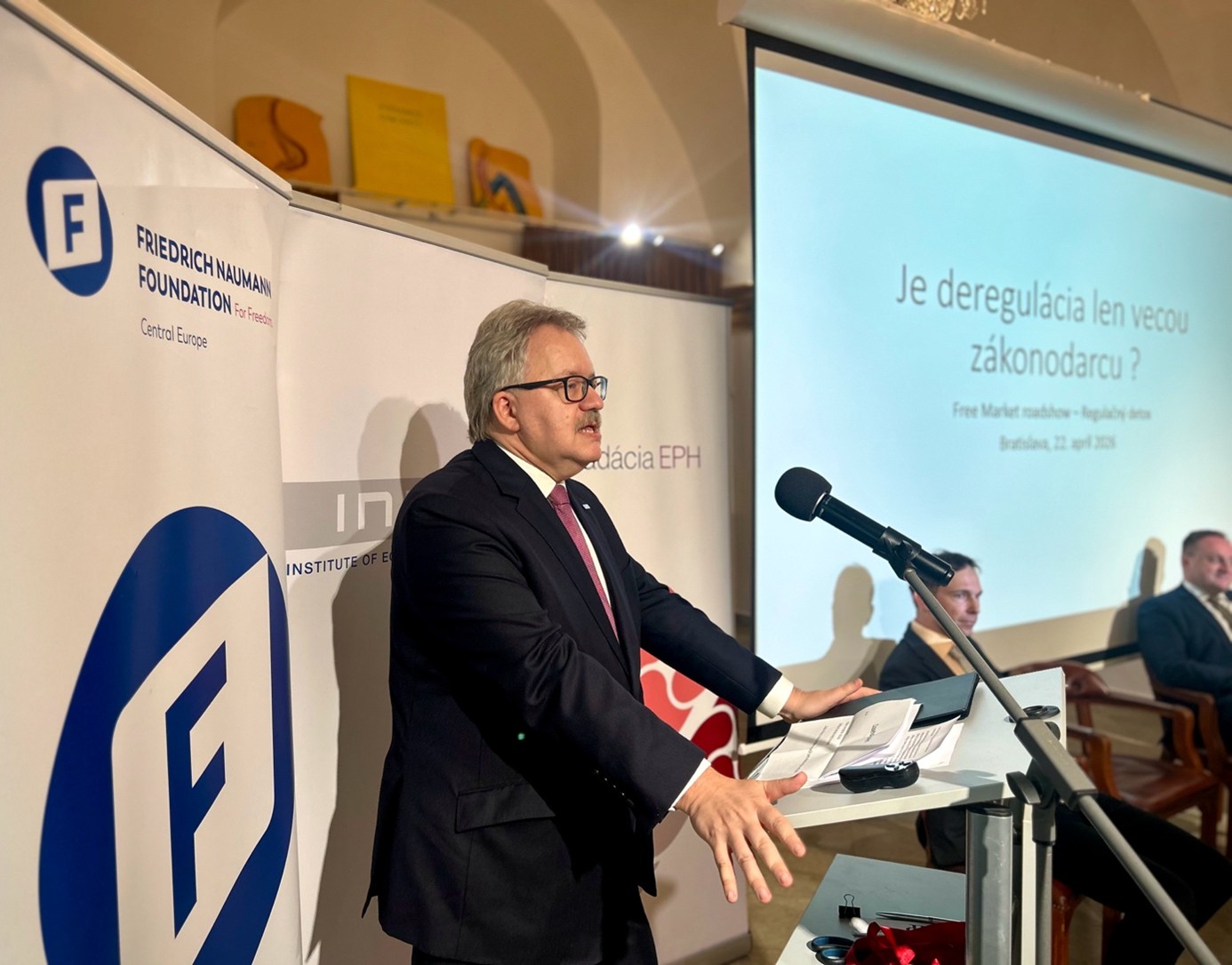
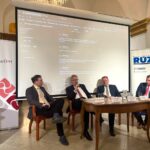
Richard Ďurana – Director of INESS – during his opening remarks
This discussion was also spurred by the so-called ‘Draghi Report’ from the fall of 2024, in which the European Union openly acknowledged the decline in competitiveness. Since then, several initiatives have emerged—the Omnibus, the 28th regime, and various other plans to simplify bureaucracy. The question remains, however, whether Europe has moved from plans to real solutions.
More than 80 conference participants were interested in the answers to the following questions:
- Have we moved from analysis to practical steps?
- Where does the real responsibility lie—in Brussels or at the level of national governments?
- How can we ease the business environment to support economic growth?
Slovak Panel
The Slovak panel presented the perspectives of local experts:
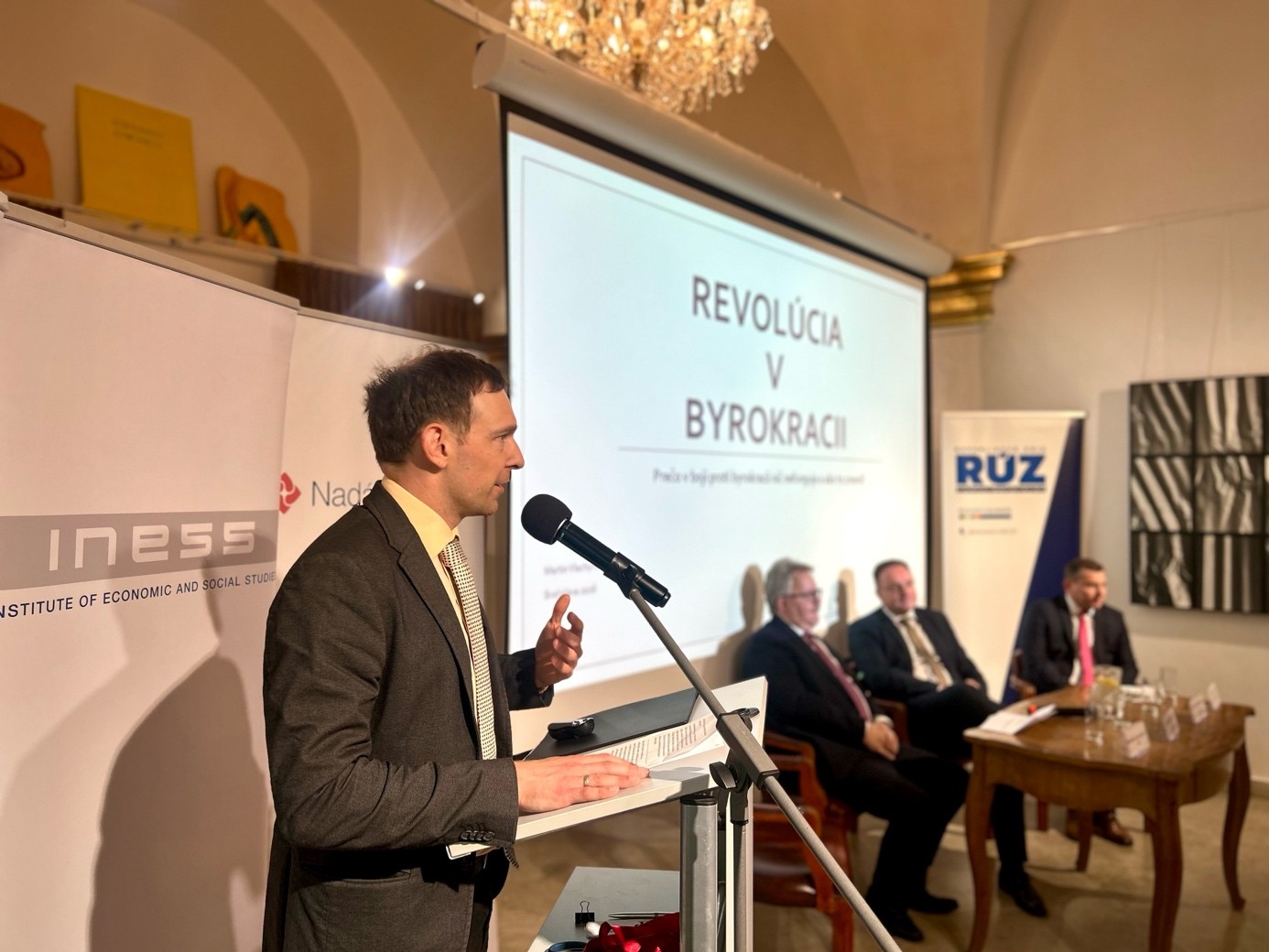
Martin Vlachynský – Director of the Research Center for the Business Environment at INESS
Martin Vlachynský spoke about the Bureaucracy Index project, which INESS developed and began publishing 10 years ago. He also pointed out that the policies of Slovak governments to date have not led to any significant reduction in the level of bureaucracy. He described the establishment of institutions such as the Bureaucracy Scrutiny Board within the EU and also discussed improved procedures for assessing bureaucratic costs. He expressed skepticism about these efforts in the EU, as politicians are rewarded for “protecting” something or someone rather than liberating them. At the same time, existing bureaucratic structures hinder this process. It would be more helpful to introduce a cap on bureaucracy and make greater use of sunset clauses (enacting laws for a fixed term); the “one in, two out” tactic is not sufficiently effective. In the legislative process, we should have an “Anti-Bureaucrat” role, who would be rewarded for reducing bureaucracy. He drew participants’ attention to the Bureaucracy Manifesto project, which INESS and its partners are also trying to promote in Brussels through the 4liberty.eu network. You can see more in his presentation here.
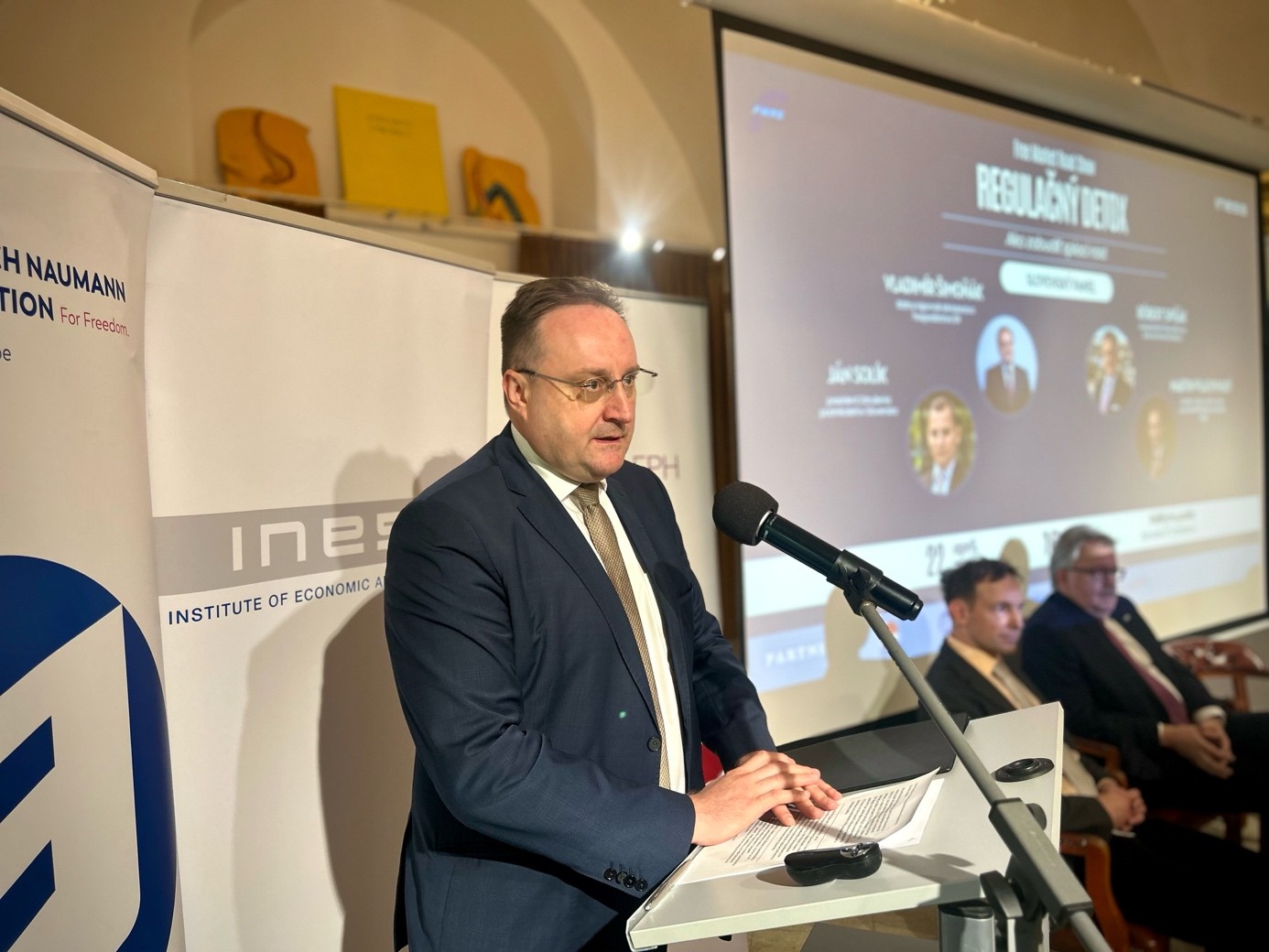
Vladimír Šimoňák – State Secretary of the Ministry of Economy of the Slovak Republic
Vladimír Šimoňák spoke about the Ministry of Economy’s efforts to curb the growth of bureaucracy, claiming that this is part of the ministry’s DNA. He expressed criticism of the high expectations surrounding Draghi’s report. The EC’s philosophy of “regulate better, not less” may not yield benefits. Draghi’s report has become something of a fetish. He did, however, recall the Lisbon Strategy, which has been quietly forgotten. He sees Draghi’s report on a similar trajectory. He does not consider omnibus bills a constructive solution, but rather an attempt to tackle a flood of a swollen river with a teaspoon. Instead of repealing regulations, they are being postponed or merely subject to parametric restrictions. He admitted to a certain frustration, as the momentum of Draghi’s report has been lost. He pointed out that most regulations arise not through political channels but through administrative channels (the EC). He sees a chance for fewer regulations in the actions of member states that “learn” to say no to emerging legislation at the EU level. He also pointed to the website zlepsipodnikanie.mhsr.sk (currently down due to a cyberattack), where the public can submit their suggestions for reducing regulations.
Robert Spišák – Vice President of the National Union of Employers
In his presentation, Robert Spišák highlighted the internal motivations of the state and bureaucrats to create and maintain regulations. He quoted Ronald Coase and pointed out that the state and bureaucrats ignore the fact that entrepreneurs are capable of reaching agreements in the market even without regulation. In his presentation, he drew on two of Parkinson’s laws: “Work expands to fill the time available for its completion” and “Bureaucrats create work for one another.” He cited specific examples of unnecessary administrative burdens resulting from senseless goldplating, which, however, affects not only government but also business bureaucratic processes. He cited a practical example from business in India, where local officials could not understand the point of a building permit, since the most skilled construction engineers cannot work at the building authority. His presentation is definitely worth watching; it is available here.
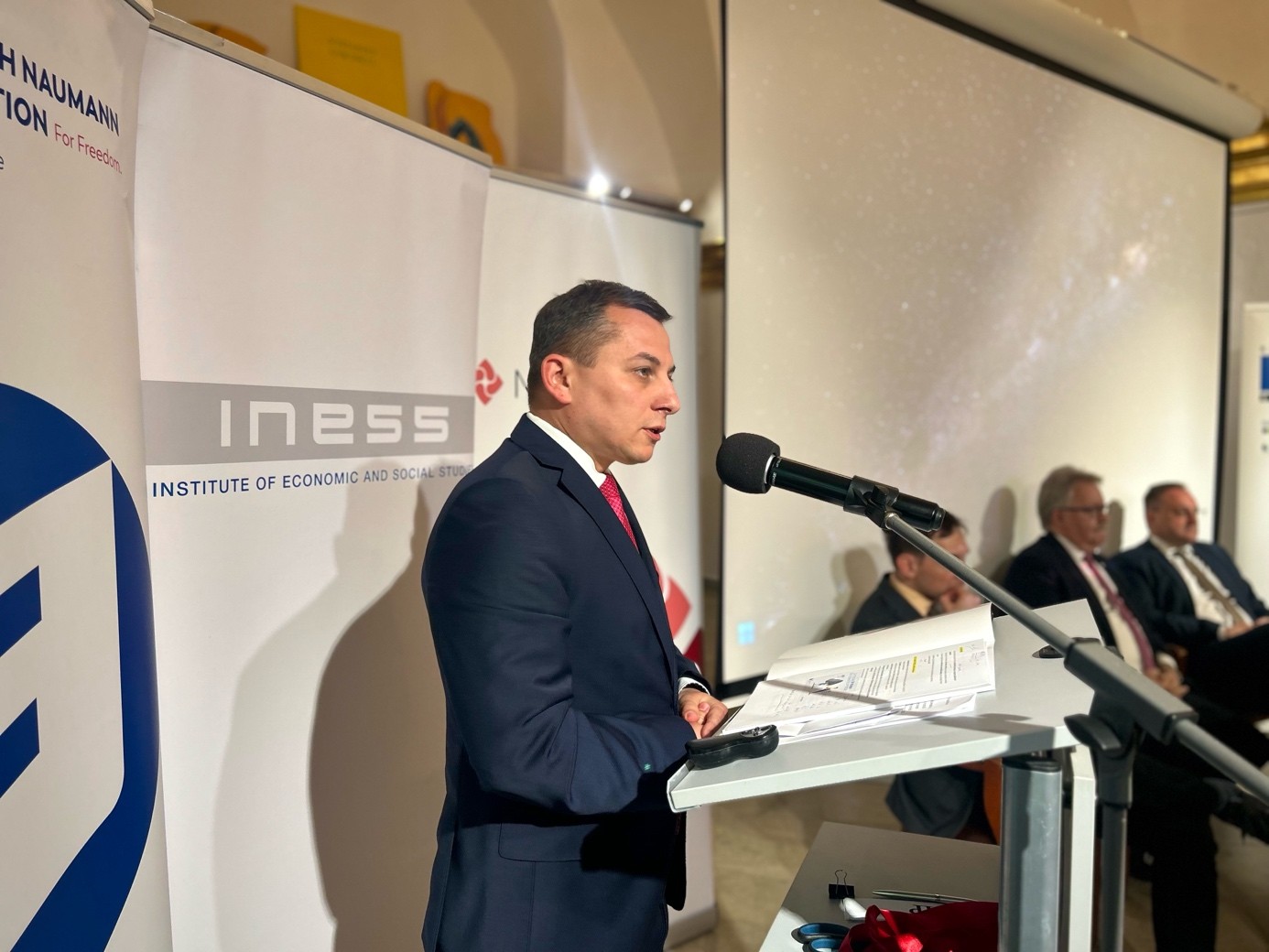
Ján Solík – President of the Entrepreneurs Association of Slovakia
Ján Solík pointed out that even the “one in, two out” restrictions are not delivering the promised results, as this requirement applies to only 20% of the regulations to which businesses in Slovakia are subject. Likewise, ex-post evaluations of laws have ended up being little more than exercises in writing, as the responsible ministries are not required to take corrective measures if the Ministry of Economy identifies regulatory shortcomings or additional costs in the adopted laws. He also highlighted goldplating and cited e-invoicing as a current example, which the Slovak government wants to introduce before EU legislation requires it. Without a change in the approach to regulations that would genuinely lead to reduced bureaucracy, the situation will not change. It is necessary to introduce a sunset clause and establish uniform rules for all businesses, without giving small firms preferential treatment through special regimes, so that companies are not afraid to grow. He also proposes limiting the legislative activity of members of parliament, whose legislative proposals often ignore the issue of regulatory burden. He also appeals to the Constitutional Court of the Slovak Republic to intervene and limit the approval of laws through expedited proceedings, which have become significantly more frequent recently.
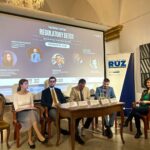
The discussion focused on specific barriers in the Slovak environment and ways to remove them.
You can watch the video recording of the Slovak panel HERE.
International Panel
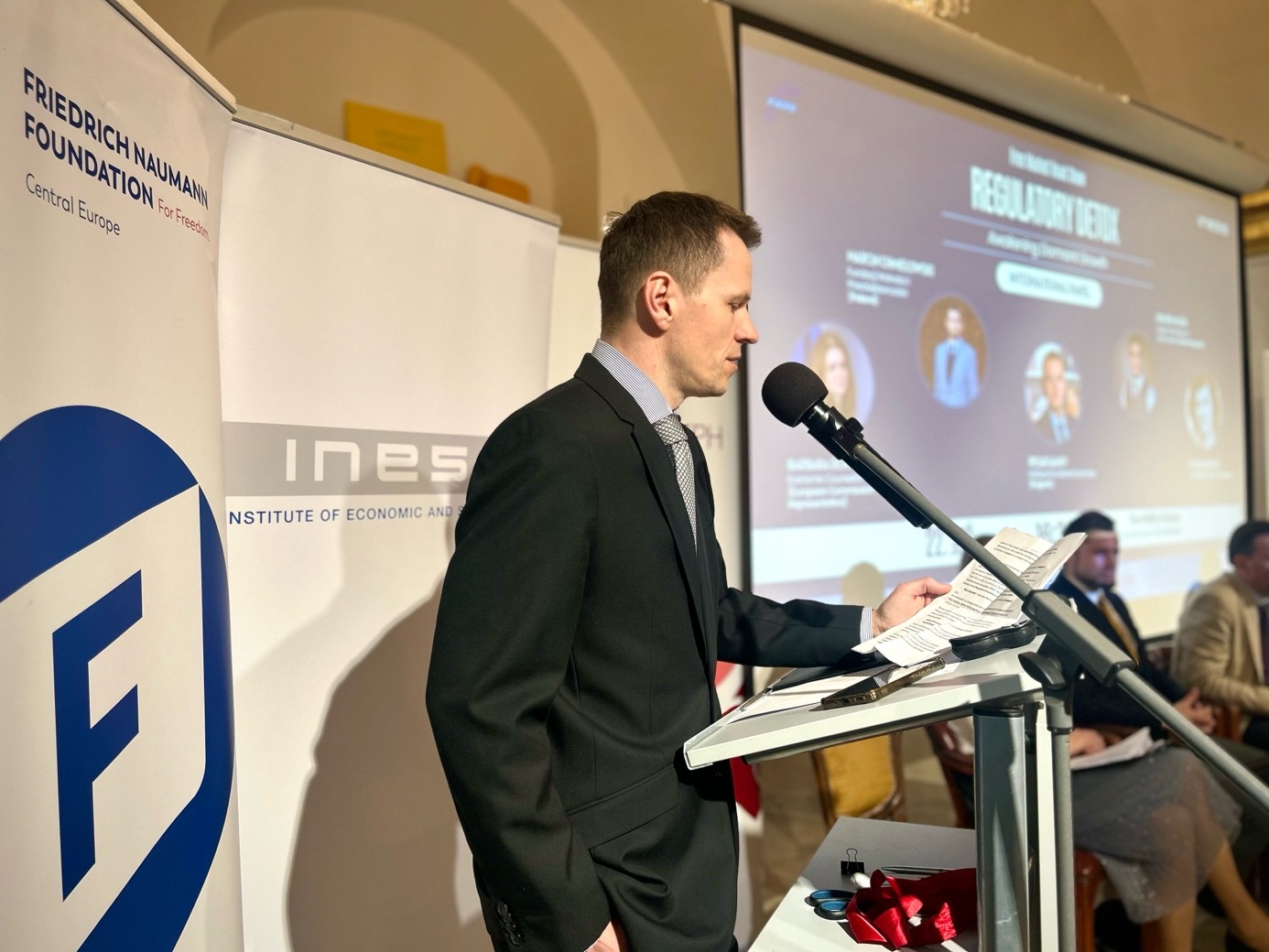
(Radovan Ďurana – Chief Analyst at INESS and moderator of the international panel)
The following speakers participated in the international panel:
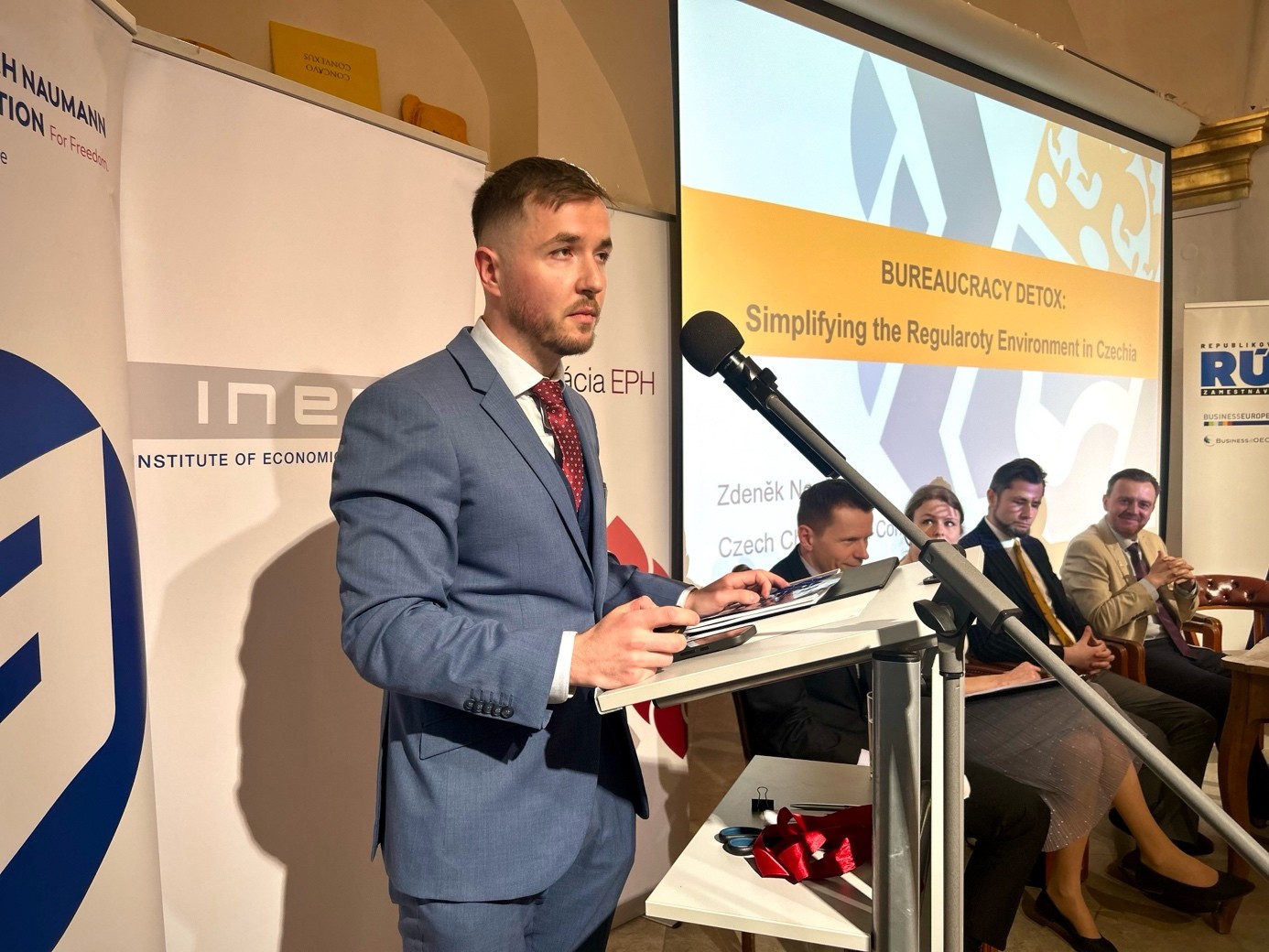
Zdeněk Neužil – Legal Analyst and Project Manager of the Bureaucratic Detox initiative, Czech Chamber of Commerce (Czech Republic)
In his presentation, Zdeněk Neužil described the complexity of the bureaucratic landscape in the Czech Republic, while also introducing tools designed to reverse this situation and gradually reduce the bureaucratic burden to a minimum. One such tool is the anti-bureaucracy law, which is expected to be debated in the Czech Parliament soon. You can find his presentation here.
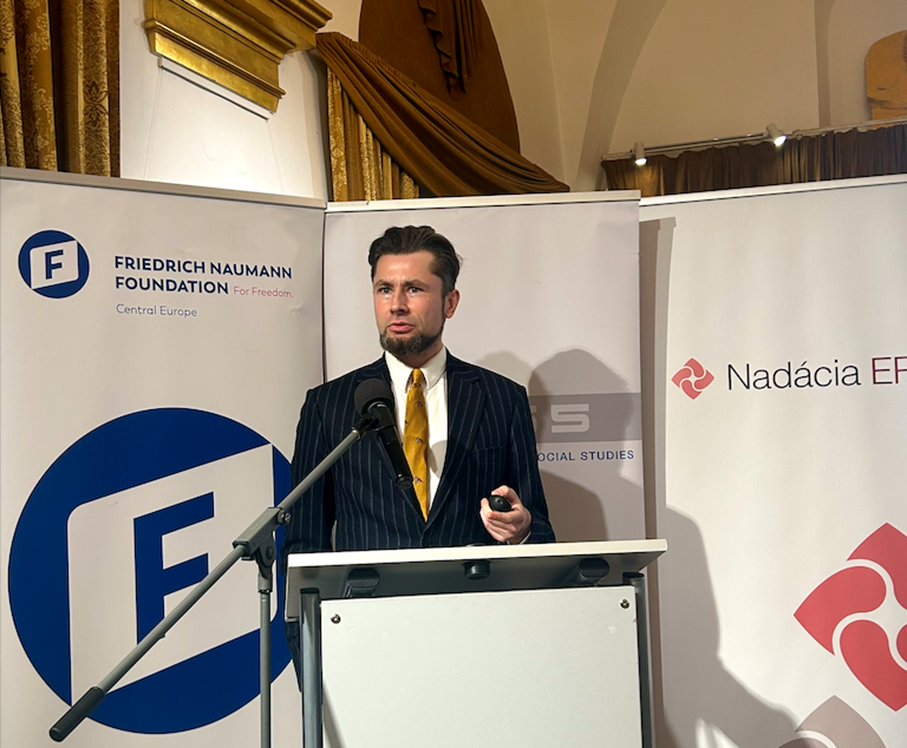
Marcin Chmielowski – Public Affairs & Public Policy Analyst (Poland) Public Policy Analyst, Freedom and Entrepreneurship Foundation (Poland)
In his presentation, Marcin Chmielowski commented on the results of economic development in Poland, once again mentioning the name of Leszek Balcerowicz, without whom Poland would likely not be where it is today. Poland’s economic successes are primarily the result of intense economic activity and its geographical proximity to Germany. Deregulation, while contributing to growth, is not its primary source. Marcin noted that Poles are masters at finding loopholes in the law or in paying taxes, but this approach is economically costly. He identified changes in tax laws and commercial law as necessary. You can find his presentation here.
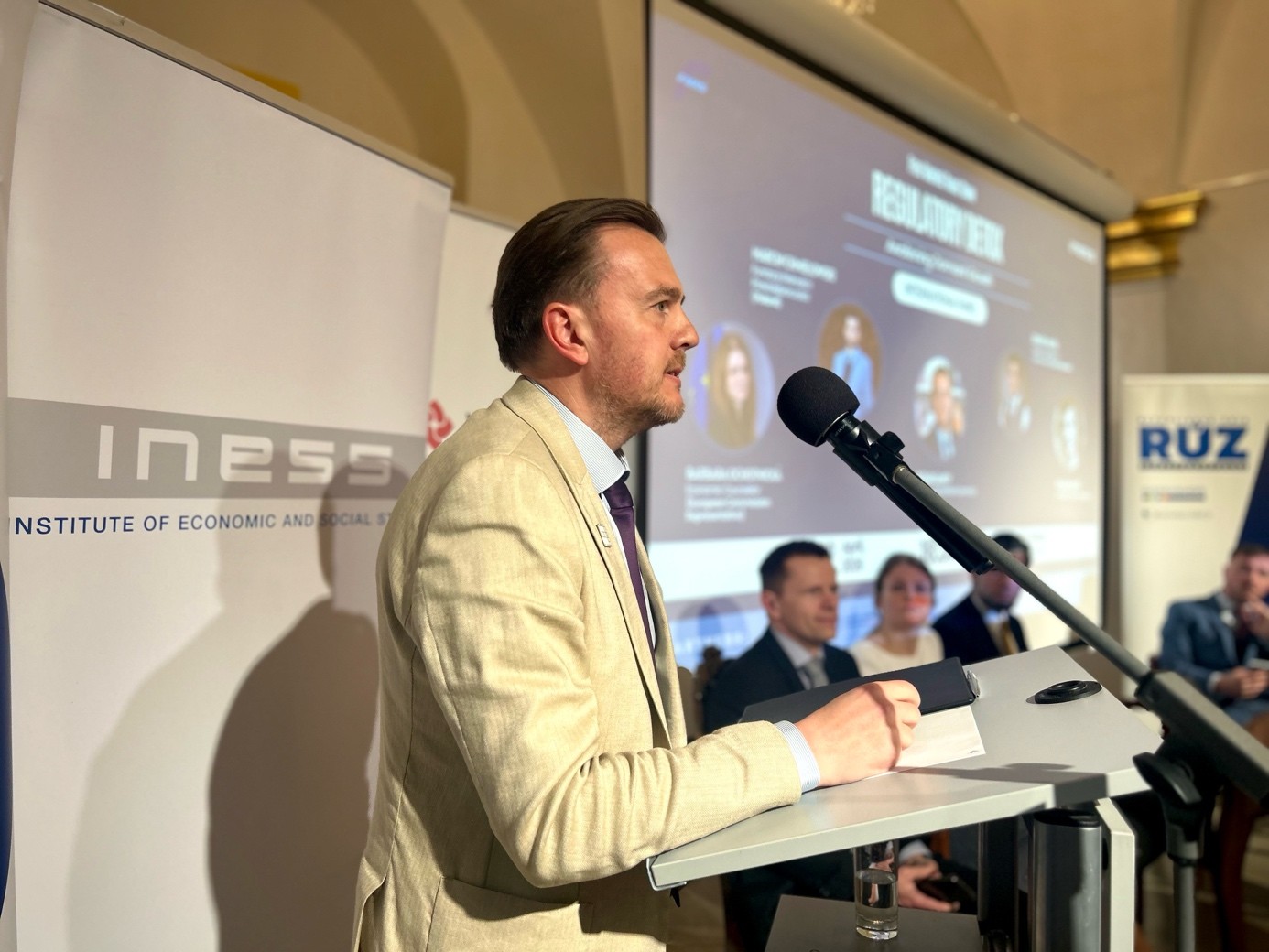
Petar Ganev – Chief Economist, Institute for Market Economics (Bulgaria)
According to Petar Ganev, the Single Market is both a key factor in the integration of the European Union and its fundamental shortcoming. Further liberalization of the Single Market, particularly in the services sector, would help significantly boost economic growth. However, the 28th regime currently under discussion in the EU is also a contentious issue. The question is whether countries are willing to give up part of their tax revenues or, potentially, labor market regulation.
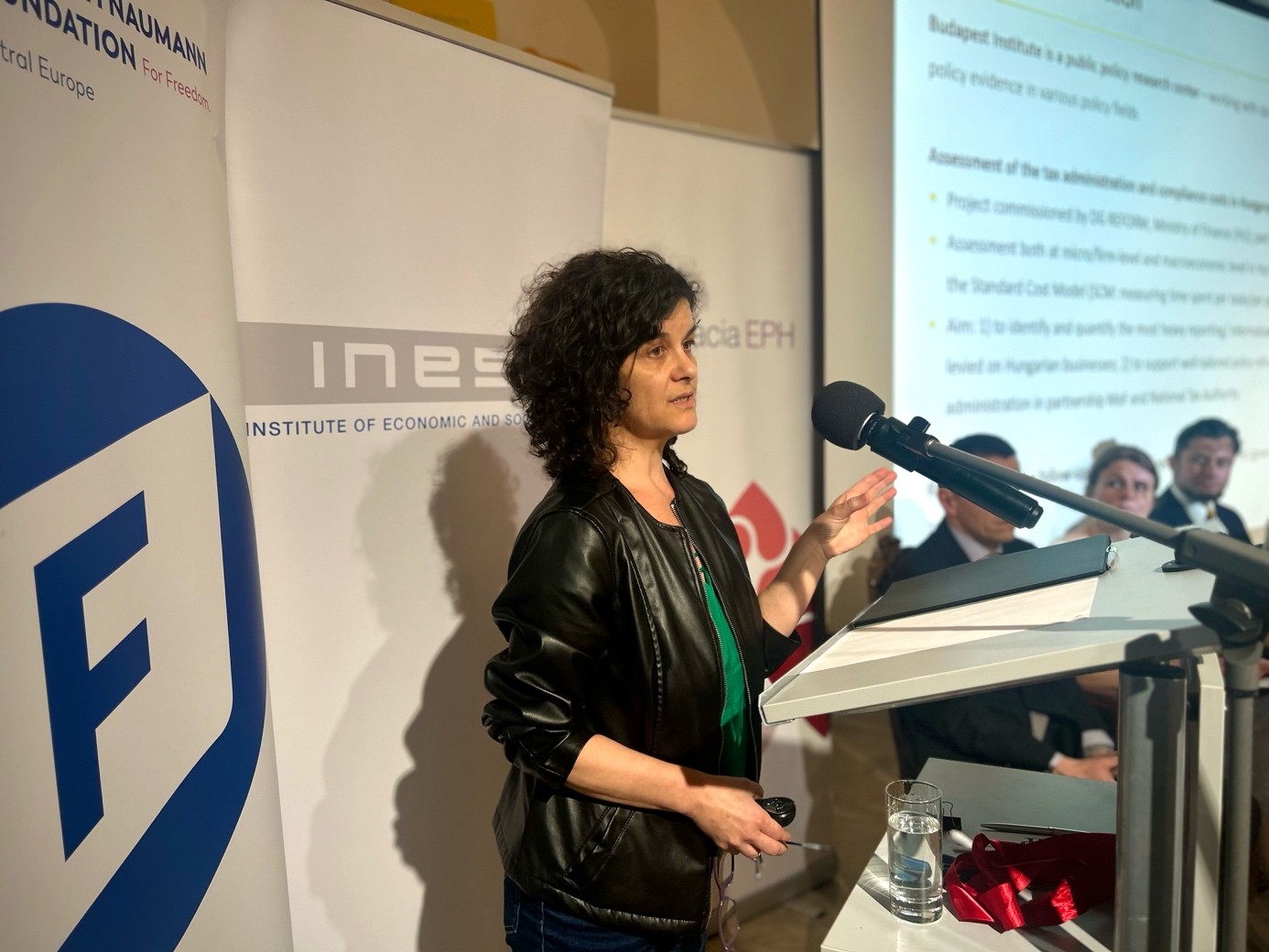
Petra Reszkető – Senior Analyst and Partner, Budapest Institute (Hungary)
In her presentation, Petra Reszkető described the results of a survey conducted among companies in Hungary and other EU countries in 2018. Her presentation, available here, contains interesting information on the share of tax compliance costs relative to total revenue. That year, Poland had the highest costs, followed by Hungary in second place and Slovakia in third, with a share of nearly 3%. In her presentation, she further describes what percentage of companies outsource these expenses and explained how the Hungarian government established a VIP department within the Financial Administration to reduce these costs for large companies in Hungary.
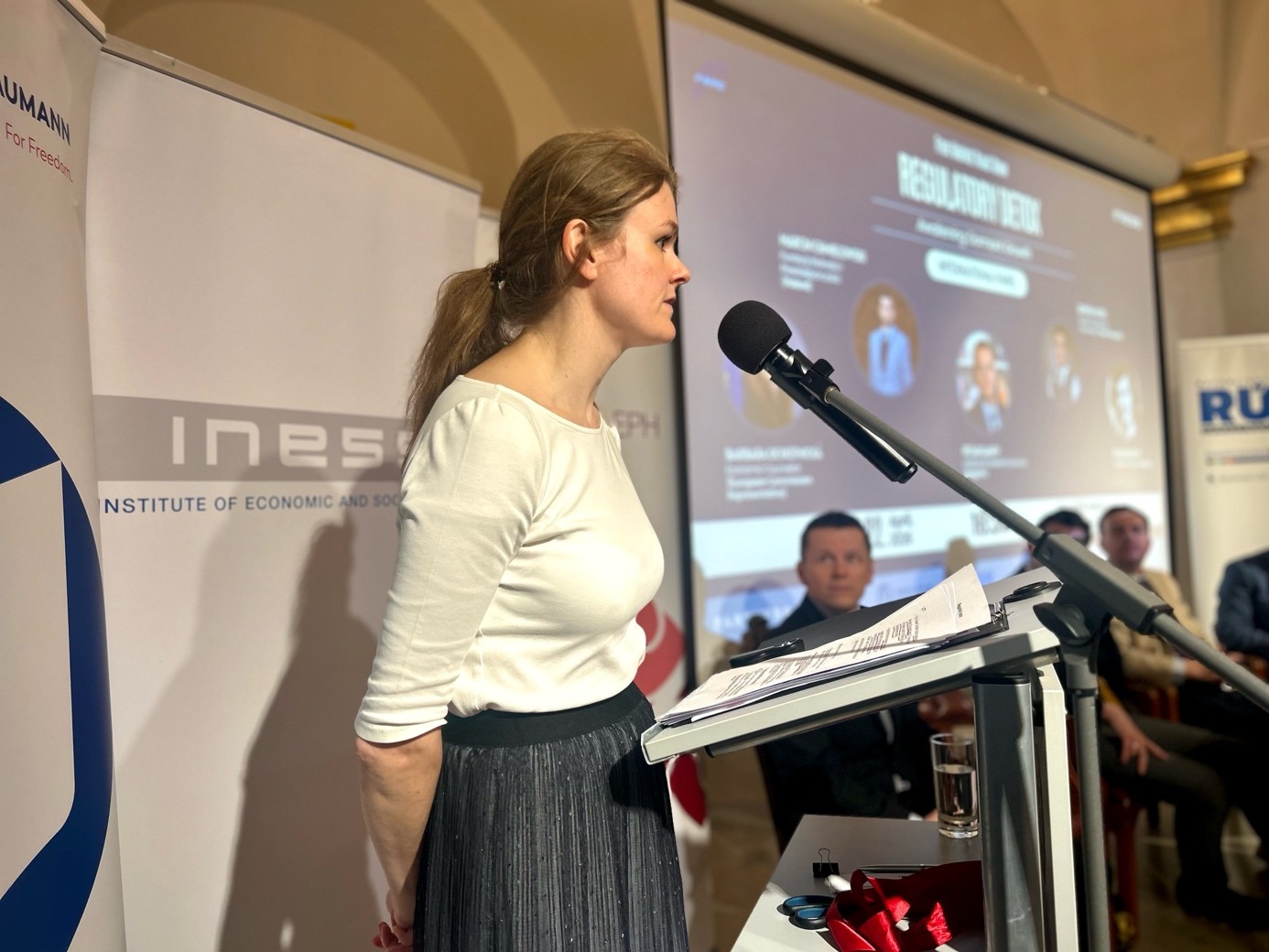
Barbara Ochotnická – Economic Advisor, European Commission Representation in Slovakia
Barbora Ochotnická highlighted an important data point from Draghi’s report, according to which there are four times as many regulations in the EU as in the US. In her presentation, she described the European Commission’s initiative to simplify legislation and regulation. The goal is to reduce the regulatory burden by 25% by the end of this Commission’s term and to save businesses a total of €37 billion. The European Commission is preparing ten packages to simplify bureaucracy and regulations, known as the Omnibus, four of which have already been published.
The discussion focused primarily on European deregulation initiatives, their limitations, and differences between individual countries.
You can watch the video recording of the international panel HERE.
The conference was held with the support of the following partners: Austrian Economic Center, Friedrich Naumann Foundation for Freedom – Central Europe, National Union of EmployersEPH Foundation.