




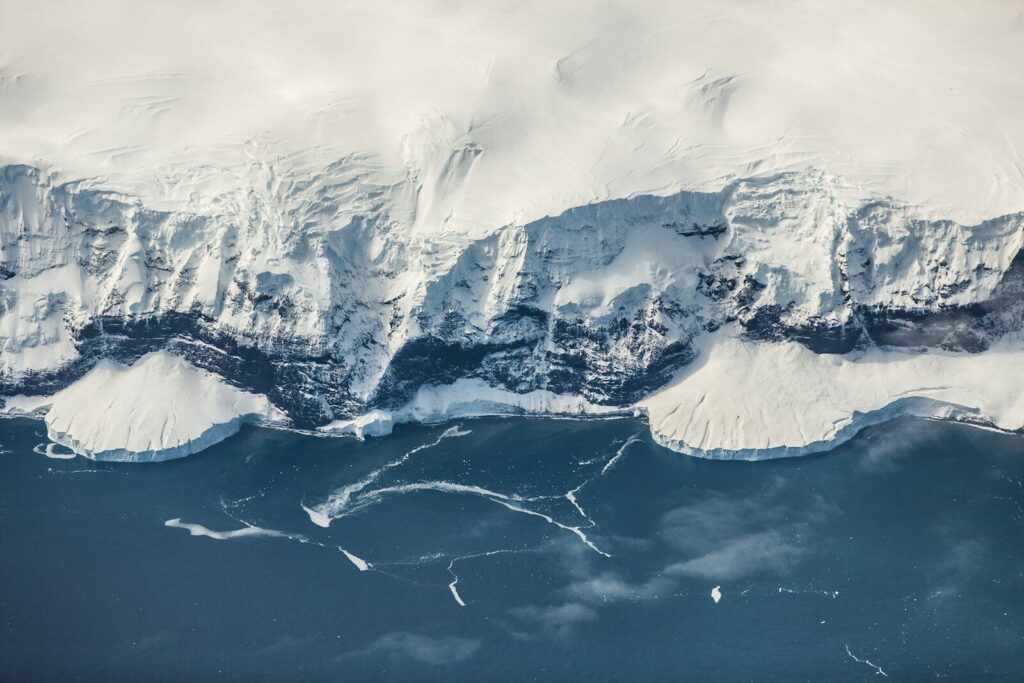
On the surface the EU’s new arctic strategy is generally going in the right direction, but what lies underneath leaves a lot to be desired. Russia and China very much desire the resources under the ice, and the strategic importance of the region, and so should the EU.
In 2007 Russian submarines planted a flag on the seabed kilometers under the North Pole, symbolically claiming the resource rich area. The EU and the US need to be more pragmatic in dealing with the geostrategic impöortance of the arctic.
Even Trump understood the strategically critical nature of the Arctic, hence his focus on Greenland. He obviously does not think the EU is capable of protecting its own interest in the region which would negatively affect the US as well. Trump made a mistake in aggressively wanting to seize Greenland rather than constructively criticizing the EU from a position of a friendly partner but seemingly Trump does not trust the EU to move beyond its glacial decision making process and bureaucracy.
The EU’s 2021 Arctic Strategy focuses on climate change as the main issue of concern. In 2026 the new strategy, building on the previous one, acknowledged security beside climate change as well. It rightly deals with the issue of submarine cables, which are key in global communications, and which are as such sabotaged constantly by Russia and China in their hybrid warfare against NATO.
However, the EU’s climate policy is no more than wistful thinking. Russia and China are pragmatic. Access to resources will give competitive edge, EU environmental regulation won’t change that just cast the EU on the margins of global powers.
Current EU climate policies are utopistic. They belong to a peaceful world where powers are not competing for global dominance. Such a world will hardly ever exist. The hard reality is that instead of trying to prevent climate change, thus putting ourselves at a disadvantage we must deal with its reality. Effective climate change policies would need the cooperation of all countries in good faith, something given the standoff between NATO and the Axis of Upheaval will not come to fruition. Therefore the hard reality needs to be faced. Thawing ice in the Arctic will create new routes, and upend global trade. A demand for research will also open up the question of submarine mining.
If rich resources are found in the seabed which can be mined for a reasonable cost given the competitive edge they would provide, at one point countries will disregard international treaties and climate regulations as the benefits of these resources will outweigh the negatives of international ostracization, given that international law often has no sanctions, other than a loss of credibility of the perpetrator. However if the mining of the resources gives a country enough economic power it will not be worth it for other countries to ostracise and perpetrator.
Furthermore the case for the moratorium on seabed mining rests on scientifically unsound principles, that it might have a dire environmental impact. Its impact is inconclusive. Why not invest in further research and find data that could be used to develop innovative new mining techniques mitigating this impact, than using regulation based on a hunch?
Instead if regulation bet on innovation. Incentivise private companies to find ways of resource extraction that does not hinder progress but also does not have a devastating environmental effect that would in the long term negatively affect the area. China and Russia are already leading in the number of licences for seabed mining. The EU and the US should catch up instead of virtue signalling on environmental issues. A world dominated by China and Russia will not be an environmentally friendly one, nor will it care much about human rights and dignity.
Western environmental efforts simply help the Axis of Upheaval, as China dominates the green industry while being the largest carbon emitter. So in order for westerners to be able to say they are environmentally friendly they increase the Chinese economy which is a large polluter in turn. Hostile countries also seemingly support environmental groups, partly to disadvantage Western countries through environmental regulation.
It is not just what is underneath the Arctic that matters though. Europe’s only successful orbital space launch from Europe (excluding Russia) was from the Norwegian Andøya Spaceport, by a private German company, Isar Aerospace. European countries have had successful launches before such as from French Guiana, yet the continent is ruefully behind. The EU however recognized that the US, a dominant player in space, is no longer a trustworthy alley. The limitation of StarShield in Ukraine made the creation of an viable alternative EU communication network all the more important. The EU is planning to have its satellite communication system, IRIS² operational by 2029, which would also provide coverage for the Arctic as per the Arctic Strategy. It is implemented by a consortium of EU agencies and private companies. However other European alternatives already exist, such as the French Eutelsat, which Germany helped Ukraine access, and Germany is also developing its own network parallelly with IRIS² as a nationally financed project.
The EU is involving private contractors, but its model is still dragging the EU behind the stellar rise of the US space industry. While American procurement favors innovation, the EU is subsiding already existing companies, and thus does not engender real competition through new disruptive and innovative actors.
The EU needs to trust innovation more, both in its environmental and space policies. The Arctic will be a lachmus test on how powers can strive for global dominance, and if the EU does not foster innovation and competition among private companies, the block will freeze, and others will dominate the strategically important region of the Arctic.