




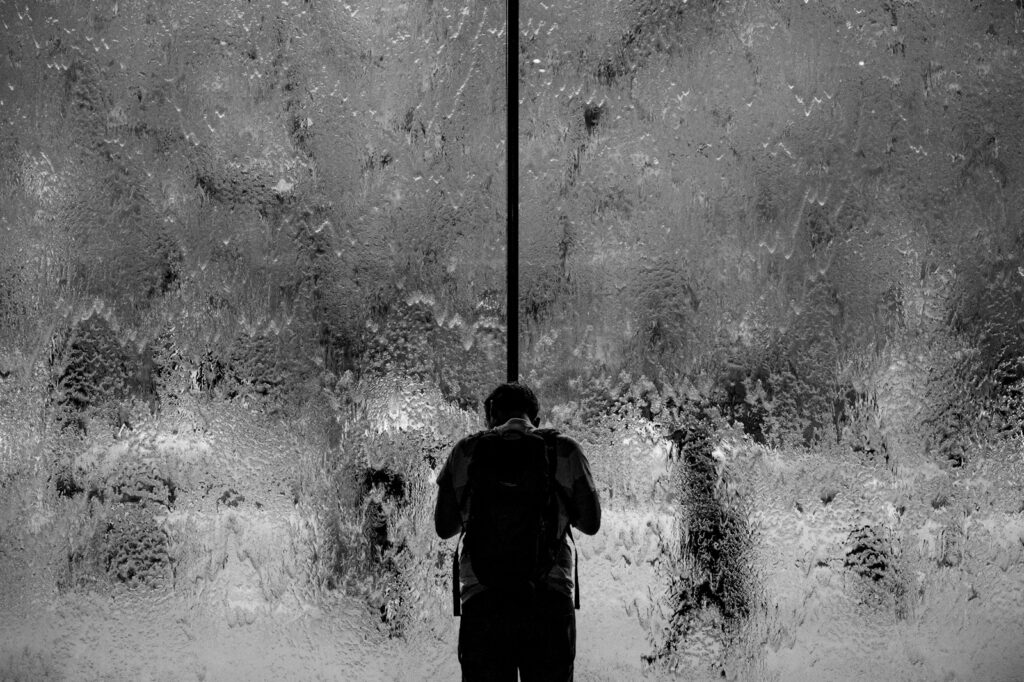
The modern world is not only a home for modern people, but also a source of suffering. It is increasingly difficult to find anything permanent or stable in it. Security, in all its dimensions, has become a hope and expectation rather than an everyday reality. In a world of uncertainty, humans feel more lost than ever. The disintegration of social structures, the fading of traditional social roles, and the constant emergence of new threats confront us today, regardless of geographic location.
Era of Civilizational Instability
We live in an era where physical and virtual realities are intertwined, making each of us part of both universes. The physical world may seem natural to us—it is the environment we were born into and learned to navigate. Yet this universe is constantly changing, forcing us to adapt, acquire new skills, and even transform ourselves.
The virtual world, by contrast, is often unnatural for older generations, a kind of “unreal reality,” a supplementary context to the physical one. For younger generations, however, the virtual universe is as natural as the physical one, having accompanied them since birth. This reality is inherently unstable. Change and variability define the virtual world, and in practice, both universes are now closely intertwined, constantly interacting and amplifying one another’s instability and discontinuity. Humans must learn to cope with this complexity.
The Fourth Industrial Revolution—of which we are both participants and subjects—offers increased productivity and efficiency but also leads to the instrumentalization of humans. Individuals increasingly become components of complex systems composed of mechanical and digital devices. People are often replaced by machines, robots, or, increasingly in recent years, artificial intelligence.
Digitization and Industry 4.0 streamline production but alienate humans from many processes around them. Combine this with environmental changes, such as climate change, energy transitions, and migration driven by these factors and expanding transport access, and it becomes clear that contemporary humans operate in a radically volatile world, where adaptation may become their primary life activity. Do we live simply to live? Or do we live primarily to adjust to a rapidly changing reality?
Old and New Wars
Modern humans also face new forms of uncertainty caused by human action, actions that have defined our species since its beginnings. These include wars, which destabilize political, social, and economic structures, destroy institutional frameworks, and often dehumanize individuals. Civilization was supposed to reduce humanity’s inclination toward armed conflict, while scientific and technological progress was meant to reduce casualties and “civilize” the conduct of wars.
After World War II, many intellectuals predicted a peaceful era, where humans could focus on international cooperation, fostering creativity, developing supranational structures, and building multicultural societies. Europe was expected to symbolize this transformation, becoming the first continent to eliminate war as a tool of dispute resolution.
These hopes proved illusory. While early signs suggested these dreams might become reality, Europe in the 1990s again became a battlefield, and the new “Balkan cauldron” shocked the international community and paralyzed observers. The full-scale war in Ukraine has once again confronted those who believed in a world based on peace, cooperation, and trade. Some political regimes still see war as a legitimate means of resolving disputes.
Consequently, contemporary humans—wherever they live—bear the consequences of ongoing or smoldering conflicts. For many Europeans, a world where war drives instability, and change appears shocking. Yet history shows that, for millennia, humanity has failed to eliminate war, making it necessary to replace pacifist dreams with a more realistic view of human society. We live in the real world, not an imagined one.
Populist Revolts
Uncertainty and instability have also entered the political life of formerly stable and predictable democracies. After World War II, it seemed that Western Europe and North America—the mythical West—would experience no major surprises. Affluent Western societies, some intellectuals assumed, would only grow richer and more developed, and their political elites would maintain stability.
Yet populism has emerged as a growing force, affecting not only “immature” or “young” democracies but also long-established, consolidated ones. The trajectory of this populist transformation remains unpredictable. Established democracies have proven largely defenseless against this populist revolt, which has become a normalized feature of Western European and North American societies.
Paradoxically, technological development has become a key ally of contemporary populists. Populists were quick to master digitization, social media, algorithms, profiling, and artificial intelligence. They leveraged these tools to promote themselves and their worldview, while simultaneously waging war on “old elites” and the “mainstream.” They convinced societies that only they can deliver real systemic change.
In today’s rapidly changing and uncertain world, persuading people of this is easier than it would have been twenty or thirty years ago. Uncertainty has thus become the soil in which populism thrives, and its growth is the first step toward a global populist revolution. Yet it is important to remember that populists thrive on revolt and the promise of change; building a stable, peaceful world is not their goal.
The Broken Human
Populists aim to exploit contemporary humans’ confusion, turning individuals into instruments for their aims. Their goal is to perpetuate chaos, instability, and destruction—not to reassure or protect people. The modern world itself delivers constant destabilization. What once gave individuals support, identity, and meaning now leaves them lost and hopeless. Civilizational illnesses have become widespread, new epidemics without cure, where remedies are largely ineffective. Mental health struggles of the disoriented individual ripple outward, affecting families, communities, and societies. Visiting a psychiatrist is no longer exceptional but increasingly routine. Disorientation has become a defining trait of modern humans, and the breakdown of social bonds has dismantled the structures that once provided support.
The broken human has been abandoned by institutions, social structures, the state, family, law, tradition, and religion. This is not the result of a deliberate conspiracy, but rather of decades-long erosion of societal structures, with nothing replacing them. Humans fought—rightly—for freedom, to break free from external chains and tyrants, to self-determine their existence. Yet this victory has come at the cost of solitude. Today, individuals must chart their own path, give meaning to their lives, face populist threats, and navigate technological innovations largely alone. The sense of strength once derived from fighting for freedom is increasingly replaced by feelings of smallness, weakness, loneliness, and helplessness.
Humanity in Trap
Modern humans find themselves in a trap—one that cannot easily be escaped. There is no simple tool to generate a way out. Should the unprecedented pace of scientific and technological development be halted globally? Should conflicts be suppressed by a world police force? Should democracy be limited to curb pluralism? Should human loneliness be addressed through the forced revival of old communities? None of these solutions seems feasible—or desirable—even if we could implement them.
The first step must be a sober diagnosis: contemporary humans are trapped. The causes are complex and cannot be eliminated with simple solutions. Recognizing the depth of the situation allows for calm, systematic, and rational consideration of potential ways forward. There are no shortcuts—the solution will not be easy or comfortable. Yet if we aim to save humanity and preserve human dignity, the time for reflection and action has come. We must plan for the future and restore hope to contemporary humans.
This article was originally published at https://liberte.pl/czlowiek-w-erze-niepewnosci/
Continue exploring:
Europe’s Competitiveness Drama
Future of Independent Journalism and Public Interest Information with Patrice Schneider [PODCAST]