



The daring attack by U.S. forces on the Venezuelan regime and the arrest of dictator Nicolás Maduro sparked a wave of controversy around the world. In Poland, reactions were fairly predictable: from enthusiastic praise of Donald Trump by circles associated with the Law and Justice party (PiS), to reflexive, often complete criticism of the U.S. president’s actions from many left-liberal groups. The public sphere was flooded with geopolitical analyses and dire, Cassandra-like predictions about the future of the international order.
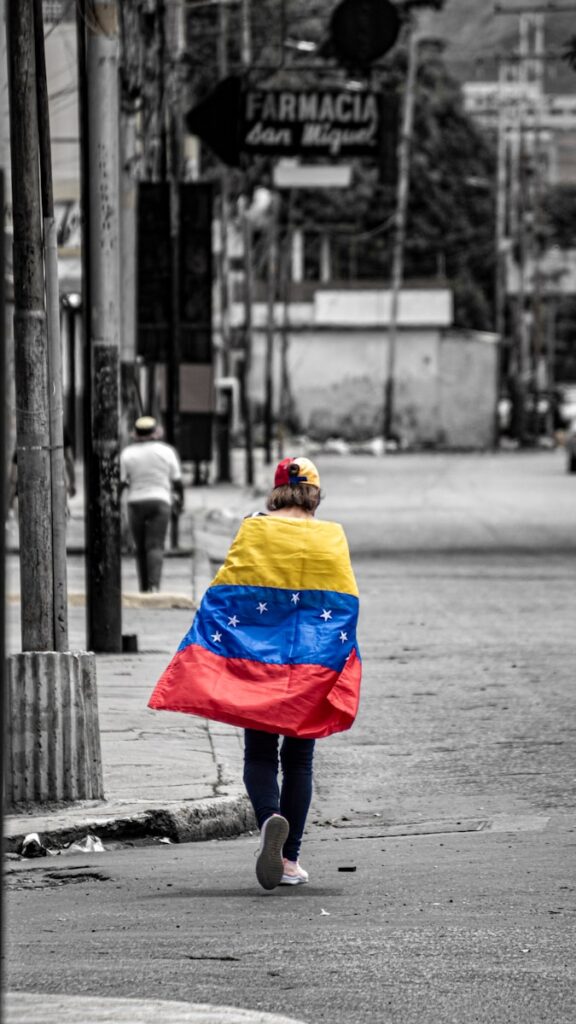
Yet in all this dispute, what gets lost is what should be the starting point of any serious reflection: the fate, future, and will of Venezuelan society.
It is worth recalling the basic facts. In 2024, the Maduro regime barred opposition leader María Corina Machado from running in the presidential election. Despite this, the election went ahead, and the opposition put forward a substitute candidate, Edmundo González. According to independent estimates and exit polls, González won around 70 percent of the vote. Depending on the source, support for Maduro ranged between 14 and 31 percent.
Nevertheless, the ruling United Socialist Party of Venezuela falsified the election results. The National Electoral Council announced that Nicolás Maduro had won with 51.95 percent of the vote, while Edmundo González Urrutia allegedly received 43.18 percent. Notably, the Council presented no documents to substantiate these figures, including polling-station protocols.
The official results were rejected by both the opposition and the overwhelming majority of the democratic world. After the election, mass protests erupted across the country and were brutally suppressed by the regime’s security apparatus. According to UN data, at least 23 people were killed and more than 2,400 were detained. The desperation of Venezuelans is hardly surprising. Under socialist rule, Venezuela has experienced one of the most severe economic collapses in modern history: since 2013, the country’s GDP has fallen by more than 70 percent.
What Does the End of Maduro’s Rule Mean?
Firstly, it marks the fall of a dictator who systematically destroyed the state, its economy, and the future of millions of citizens.
Secondly, it represents a real opportunity to restore democracy in Caracas.
Thirdly, it delivers a serious blow to one of Vladimir Putin’s most loyal allies.
Finally, it breaks with the harmful, rhetorically isolationist MAGA strategy and strengthens the United States’ position in its global rivalry with Russia.
It is no coincidence that events in Venezuela occurred just days after Moscow announced false information about an alleged Ukrainian attack on Vladimir Putin’s residence—claims Russia used as a pretext to suspend peace talks on Ukraine conducted under the auspices of the U.S. administration. It is also worth remembering that in October 2025, on Putin’s birthday, Russia signed a strategic partnership agreement with Venezuela covering areas such as the economy, energy, and raw materials. For years, Russia has remained the primary supplier of weapons to the regime in Caracas.
From the perspective of international law, did Donald Trump have the right to arrest the leader of another state? Of course not. The problem, however, is that the system of international law has for decades proven powerless in the face of authoritarian regimes that systematically violate human rights and turn the lives of entire nations into a nightmare. The UN system increasingly resembles a façade, which is full of resolutions, appeals, and declarations, but lacking meaningful action.
Nicolás Maduro is a textbook example of this failure: he rigged elections, effectively stole power, persecuted the opposition, ruled through corruption, supported drug cartels, and led the country into economic ruin. Yet for years he remained virtually unpunished.
Critics of the U.S. intervention argue that it sets a dangerous precedent that could encourage other authoritarian actors to undertake similar actions against democratic states. This argument, however, ignores the fact that dictatorships (Russia foremost among them) have for years already engaged in aggressive actions against democracies and Western allies. Ukraine is the most dramatic example, but far from the only one. One need only look at the series of pro-Russian coups in Africa. If anything can restrain dictators, it is not passivity and proceduralism, but a clear demonstration of strength and resolve by democratic states—something that has clearly been lacking so far.
If the world is increasingly beginning to resemble a concert of great powers, the only realistic path for Europe to avoid becoming merely an object of this competition is to build the European Union into a global political and strategic force capable of co-shaping the international order based on European values.
A situation in which authoritarian leaders violate all rules and advance with impunity, while democracies are paralyzed by their own regulations and fail to respond, will not lead to a better world. In the case of Venezuela, regime change enjoys clear majority support, and there are real leaders and institutional structures upon which a democratic state can be rebuilt.
Can we be certain about the intentions behind Donald Trump’s actions? No. In his case, chaos and inconsistency are permanent features of his political style. The final assessment of this decision should therefore be postponed until its consequences become clear. If, however, U.S. intervention leads to the return of power to democratically elected leaders, or to a broad political settlement and fair new elections in Caracas, one thing can be said: it was worth it.
Venezuelans have made it clear that they want change. The democratic world should support them in their struggle against a brutal dictatorship—regardless of how reluctant it may be to embrace Donald Trump himself.
The article was originally published at https://liberte.pl/sprawa-maduro-w-niecheci-wobec-trumpa-ginie-sprawa-wenezuelczykow/
Continue exploring:
2025 – Year of Challenges and Uncertainty: MEMU Team’s Perspective
Trends and Tendencies in Participatory Budgeting: City Government and Local Democracy in Budapest