


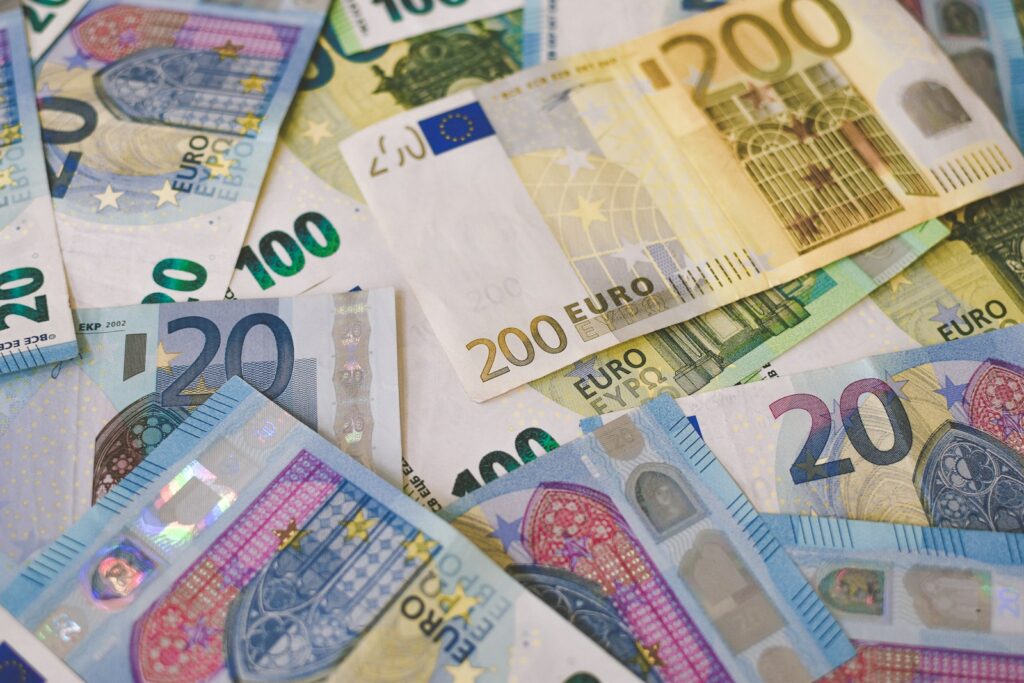
Bulgaria has adopted the euro. After more than 28 years under a currency board arrangement, the country is entering a new stage of its development. The bank failures and hyperinflation of 1996–1997 wiped out people’s savings and pushed Bulgaria to the bottom of Europe, below 30% of the EU average in GDP per capita in purchasing power parity by the end of the 1990s.
What followed were almost three decades of mostly economic growth and convergence. Today, Bulgaria is approaching the 70% mark on the same indicator and is on the verge of catching up with the group of Central and Eastern European (CEE) countries that performed better in the early years of transition and joined the EU in 2004. In recent years, this group has been positioned between 75% and 90% of the EU average.
The currency board meant trust and stable money, that is, security in the purchasing power of the national currency. In this sense, joining the eurozone is the natural conclusion of the currency board. But trust and stable money do not guarantee prosperity neither under a currency board nor within the eurozone. A lack of long-term political vision, pressure on the budget, limited ambition for bold reforms, corruption, and a dysfunctional judicial system are obstacles that Bulgaria will have to overcome in the coming years.
Once the emotions around the euro’s introduction fade, it is time to focus on the country’s long-term goals and challenges. Bulgaria has adopted the euro. After more than 28 years under a currency board arrangement, the country is entering a new stage of its development. The bank failures and hyperinflation of 1996–1997 wiped out people’s savings and pushed Bulgaria to the bottom of Europe, below 30% of the EU average in GDP per capita in purchasing power parity by the end of the 1990s.
- Bulgaria can and should be a place for growth, personal prosperity, the fulfilment of dreams, discovery, achievement, and global leadership.
- Bulgaria needs a highly productive and innovative economy, where entrepreneurial energy creates and successfully develops competitive industries and services.
Ambitious but not impossible: within the lifetime of one generation, Bulgaria can reach average European income levels. The intermediate goal should be to firmly join the group of CEE countries within the next three to four years. - Bulgaria needs a strong business climate and good conditions for investment, maintaining low taxes that encourage risk-taking, capital accumulation, and work.
Public finances can be kept balanced without burdening our children with debt. The last 30 years show that Bulgaria succeeds when it follows responsible fiscal policy; the opposite leads to political instability and risks to growth. - Bulgaria needs an independent judiciary that guarantees citizens’ rights and provides equal conditions for economic activity, protecting property rights and the enforcement of contracts.
- Bulgaria needs an effective public sector that delivers clear and measurable results for every euro spent or invested. Education must produce skilled people who can adapt and learn throughout their lives in order to succeed in the transforming knowledge-based economy. Healthcare must deliver longer lives and more years in good health.
- Economic growth must be visible in the regions. Local quality of life is directly linked to the ability of municipalities to design policies and invest in their urban environment.
In short, Bulgaria needs more economic freedom, the rule of law, and a small but effective and accountable state. This is what will allow the country to succeed within the eurozone.
Continue exploring:
It Would Be Best If Bulgarian Parliament Takes a Break Until Spring Elections
2025 – Year of Challenges and Uncertainty: MEMU Team’s Perspective