




“I want more!” – the refrain of Lion Ceccah’s song, chosen to represent Lithuania at the Eurovision Song Contest, seems to have touched something deeper than pop taste alone. Eurovision is Europe’s great annual song contest: a glittering spectacle, a national showcase and a shared cultural ritual watched by millions. For a few minutes on that stage, a country’s song becomes its voice to the world. And Lithuania’s voice this year says: I want more.
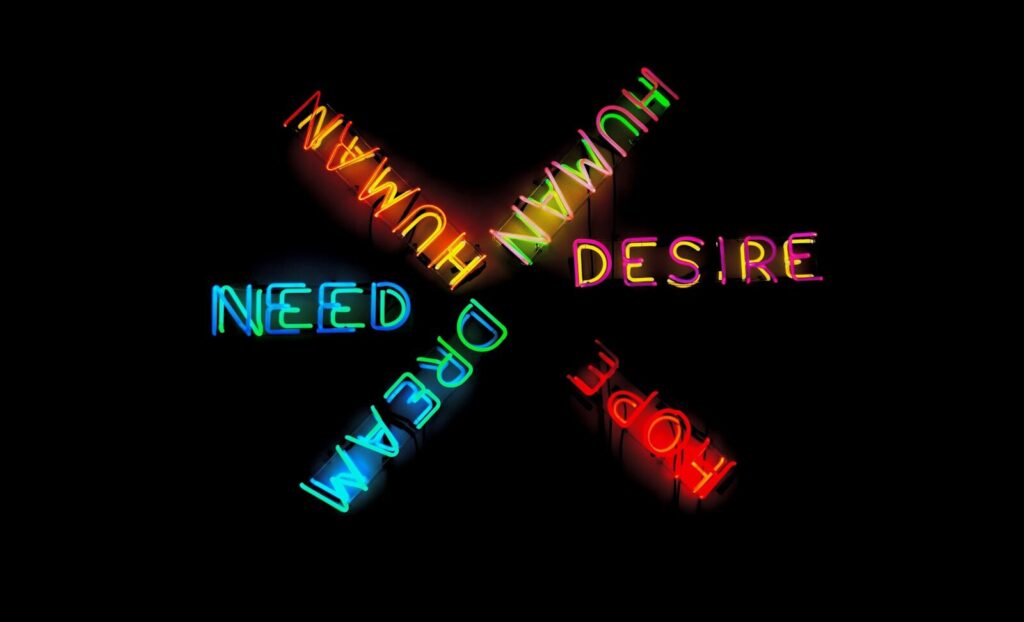
Perhaps the song drew such a strong response because we all want more. It speaks to one of our deepest longings. We human beings are creatures that strive toward a goal – always hungry for change for the better, for advancement, for goodness, and for more of it. Around us, in the world, within ourselves and, of course, in the others. This is precisely what distinguishes the human being from other creatures: an insatiable longing, desire, and hunger.
We long for love, beauty, and meaning. “Who dares to ask why I live?” – sings Lion on the stage. We are insatiable: however much we achieve, we still want more. Saint Catherine of Siena wrote: “The human heart desires that one, absolute good which can satisfy it; when it does not find it, it contents itself with many limited goods.”
The easiest thing is to believe that this eternal thirst can be satisfied with things: new phones, dresses, a cup of coffee. Another one. A pineapple, sweets, salad, healthier salad. Wealth and reserves in the bank. Yet however much you accumulate, scarcity does not disappear; you cannot lock it in a safe like a bar of gold. Economists know that additional goods, over time, bring less joy. But human desire does not tire so quickly. It reaches beyond things.
In Soviet times, our shortage of things was so immense that every item obtained after a long queue or through connections became almost a fetish. I remember the first French perfume I got as a gift – how much meaning had been poured into that scent. A fetish, truly. And I remember the look on my face when my child, while playing, poured it out onto the carpet – slowly and with wonder – while I did not manage to reach it in time. At that moment it seemed as if this had been the only and the last perfume of my life. But then Sąjūdis came, Lithuania’s independence, and the end of communism.
Until then, we built little altars out of ordinary things on top of the washing machine or in the alcoves of the sideboard shelves. On the bathroom altar we placed Polish shampoo, a comb, a German toy, a candlestick, and a small bouquet of plastic flowers. In the gleam behind the sideboard glass stood, of course, crystal glasses, vases, a religious picture and, once again, a candlestick – so that we would see light at the end of the tunnel.
It is easier to go away from the altars made of things. But desire does not disappear. It merely changes form. And how pleasant it is to arrange cushions perfectly on a soft sofa, so that when we return from exhausting work they testify to the wholeness of life we long for. I say this almost without irony. We simply need to taste wholeness, even if it is only a gentle substitute for it.
But what are we to do with an insatiable spiritual, existential thirst? We seek ever more varied experiences: to travel to more countries, see more films, experience more, taste more – and still we come up against limits. A person visits every monastery, tries yoga, golf and tango, and still wants more. In a shop we would like to buy more, but our wallet limits us. At the book fair, we are brought back to earth by physical strength itself: how many more books can I carry? And still I want more.
Now, what about creativity? How many paintings must a painter create before saying, “I can add nothing more”? And a writer? When our creative plans run up against limited time, it is frightening. “…we desire that one and absolute good capable of satisfying us, and when we do not find it…” – counting our fragile days, we whisper: “I want more.” Even a monk who has experienced the presence of God is not fully satisfied: the more he is filled, the more he thirsts. This is where we find what our research into the phenomenon of lack calls ontological lack. It is not merely an economic problem, a problem of material things. It is the structure of being and of human being, the engine of human creativity and progress. It drives us to create, to love, and to seek.
Blessed is the thirst that wakes us each morning. So, when Lion Ceccah’s cry “I simply want more” rings out powerfully beneath the Eurovision vaults in Vienna, it will give voice to every desiring human being who keeps moving forward. And that is why it will be heard.