



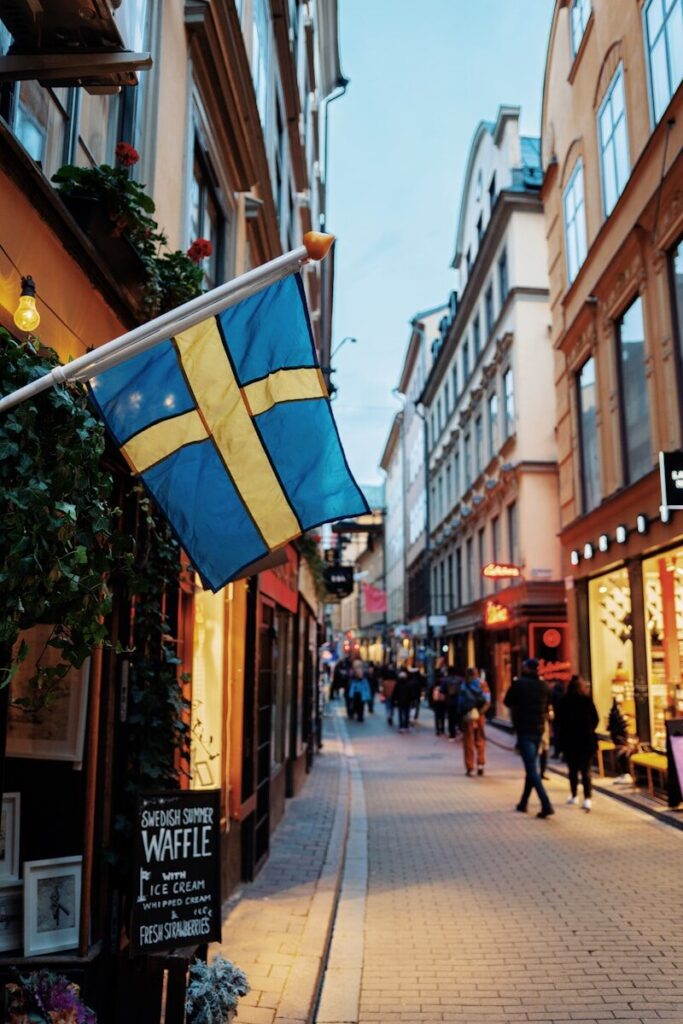
For decades, Sweden has been presented as a proof of the superiority of the welfare state. In reality, its success tells a different story: one of liberalization, a crisis caused by excessive public-sector expansion, and a return to market pragmatism.
The visit of the Swedish royal couple to Poland offers an opportunity to strengthen relations between two important partners in the region. Russia’s invasion of Ukraine and the tense situation in the Middle East mean that security is now a key concern for both countries. Closer military cooperation, the purchase of high-quality equipment, and the exchange of defense experience will undoubtedly feature prominently in discussions.
Security is costly, which is why economic growth is so essential. In the Polish public debate, calls occasionally emerge to follow the “Swedish model” of development. Yet, discussions about that model in Poland rarely move beyond ideological trenches. For some, Sweden represents a paradise of high taxes and universal welfare; for others, it serves as a warning about socialism in practice.
Economic history paints a far more complex picture. Swedish prosperity is not a by-product of socialism but the result of more than a century of strengthening economic freedom – a foundation that survived even the most risky political experiments.
A Liberal Foundation for Growth
The widespread belief that Sweden built its wealth through high taxes and an expansive welfare state reverses the actual chronology. The truth is the opposite: Sweden became rich before it built its welfare state. As Swedish author Johan Norberg reminds us, between 1840 and 1870, the country underwent a period of radical liberalization: craft guilds were abolished, free trade was introduced, and strong property rights were established.
The intellectual father of this success was Anders Chydenius, sometimes called ‘the Swedish Adam Smith’. As early as 1765 – a decade before the publication of The Wealth of Nations – he argued that economic freedom and freedom of the press were the keys to prosperity. These liberal reforms allowed Sweden in the mid-19th century to achieve an unprecedented leap in development.
According to research by Professor Lars Jonung, in the first act of Sweden’s economic drama, covering the years 1890–1950, the country experienced faster growth than almost all comparable economies. This was Sweden’s ‘golden age’. Crucially, by 1950 – when Sweden was already the fourth-richest economy in the world – public spending amounted to less than 20% of GDP, lower than in the United States or the United Kingdom at the time. Wealth creation, therefore, preceded the expansion of the welfare state. It was not its consequence.
The Experiment That Failed
Only in the 1970s and 1980s did Sweden see a rapid expansion of the public sector and an attempt to pursue a so-called ‘third way’. During this period, the country became a testing ground for extremely high progressive taxes and regulations that significantly constrained entrepreneurship. Professor Jonung describes this era as a ‘social democratic slowdown’. Between 1970 and 1995, Sweden fell from fourth to fourteenth place among the world’s richest countries.
The tax system eventually reached the point where the state could formally take more than a citizen earned. In 1976, Astrid Lindgren, the author of Pippi Longstocking, wrote the famous satirical story “Pomperipossa in Monismania” after discovering that her marginal tax rate had reached 102%. The renowned film director Ingmar Bergman left the country after being taken from a theatre rehearsal by police on suspicion of tax fraud.
Major businesses also moved abroad. IKEA, Tetra Pak, and H&M began relocating decision-making centres or family capital outside Sweden. Even the flamboyant stage costumes of ABBA were not merely an aesthetic choice. Tax law allowed the cost of stage outfits to be deducted only if they were so extravagant that they could not reasonably be worn in everyday life. Ultimately, the overexpansion of the state contributed to a deep financial crisis in the early 1990s, forcing Sweden to reassess its previous assumptions.
A Return to Freedom and Common Sense
Modern Sweden is a country that drew lessons from the crisis of the early 1990s. Since then, it has implemented a series of deep market-oriented reforms that Professor Assar Jonung describes as a ‘neoliberal revival’.
Contrary to stereotypes, Swedish public services are not a monolithic system run exclusively by the state. Parents can choose between public and independent schools within a voucher-based education system. Many services – from waste management to healthcare – are provided by private companies competing for public contracts. Sweden’s defence industry, in which private companies play a key role, also developed within a competitive and innovative market economy supported by a long-term national security strategy.
After the crisis, the labor market was liberalized, a pension reform strengthening the capital pillar was introduced, and strong fiscal rules were adopted. Today, Sweden has no inheritance or gift tax and no wealth tax, while its corporate tax rate of 21% is often lower than in many OECD countries.
Pragmatism Instead of Dogma
A good example of Sweden’s pragmatic regulatory approach is its policy on reducing harm from nicotine use. While many European Union countries are tempted by restrictive bans, Sweden has opted for incentives that shift consumption towards less harmful alternatives to cigarettes. One example is snus, widely used in the country and increasingly discussed in Poland since the presidential campaign.
The story of snus – from its role in improving public health indicators to its place in Sweden’s negotiations to join the European Union – is told in Tomasz Agencki’s documentary How Sweden Quit Smoking. As Health Minister Elisabet Lann wrote in a letter to the Riksdag in November, “the government acted on the basis of well-established Swedish positions (…) emphasising the importance of adopting a harm-reduction perspective in tobacco policy, clearly recognising scientifically proven differences in the harmfulness of various tobacco and nicotine products”. This approach has helped Sweden achieve the lowest cigarette-smoking rate in the EU.
This stands in sharp contrast to Poland’s public policy, often characterized by chaotic tax changes and selective bans, such as the removal from the market of most nicotine pouches – the products closest to the Swedish snus. Poland and the EU could benefit from drawing inspiration from Swedish pragmatism instead of tightening regulations without analyzing their real effects.
Capital That Cannot Be Decreed
Any analysis of Sweden’s success must also consider social trust. In Scandinavian Unexceptionalism, Nima Sanandaji argues that strong work ethics and social cohesion existed long before the expansion of the welfare state. Data show that descendants of Scandinavian immigrants in the United States – living with far less generous welfare systems – often achieve even better economic outcomes than their relatives in Stockholm.
This offers an important lesson for Poland: social transfers alone do not create prosperity. Prosperity is built by institutions that do not undermine citizens’ trust in the state or entrepreneurs’ trust in the market. Sweden succeeded not because the state provides more benefits, but because – after a period of costly mistakes – it largely stopped obstructing the creation of wealth.
Lessons for Poland
What can Poland learn from Sweden? Prosperity requires freedom, and as societies grow richer they gain greater capacity to finance higher social spending or defence budgets. Sweden’s high GDP is the result of liberalism and decisive market reforms. Durable prosperity cannot be built simply by increasing public spending without protecting economic freedom.
A pragmatic approach to nicotine policy produces better results than rigid bans. It is also worth remembering that Sweden’s strength lies in transparency, stable fiscal rules and allowing the private sector to deliver public services.
Sweden is not a country without problems, and not every institutional solution can easily be transplanted to Poland. Cultural differences, levels of social trust, and informal institutions matter more than we often assume.
The royal visit is, therefore, a good moment to stop viewing Sweden through the lens of a socialist utopia. It is, in fact, one of the more market-oriented economies in Europe – a country that built prosperity by strengthening economic freedom. The Swedish model is not the evidence of the triumph of socialism. It is a proof that even an extensive welfare state must, ultimately, rest on free markets and private enterprise. Wealth must first be created before it can be spent on social benefits or defense.
The article was previously published in Polish by Rzeczpospolita.