Leszek Jażdżewski talks to Olha Konsevych, a Ukrainian journalist and researcher, the Editor-in-Chief of the Ukrainian newspaltform 24tv.ua, about the war in Ukraine.
Reading news in Hungary is an arduous task. If you speak the language and open your browser to learn about current affairs, you’d be hit by a dystopian reality. Only a handful of independent online outlets exist, and the situation is worse in the print media or in places outside of the capital, Budapest.
On January 12, 2022, the Republikon Institute organized the “Finish Line” conference, where political science experts and researchers discussed the possible results of the upcoming Hungarian elections in April.
You can choose what to believe in, you will always find politicians, opinion leaders, celebrities, and even pseudoscientists who will not only strengthen your beliefs, but also fuel them for the sake of their own popularity and profit.
Amid Russia\'s growing military build-up along Ukraine\'s borders, the Slovak pro-Kremlin media are increasingly turning to aggressive rhetoric directed against NATO and Ukraine.
The chair of the Law and Justice (PiS) suggests that under his rule Poland is fighting on two fronts and is generally a victim of an international conspiracy in which Lukashenka, the Czechs, and the European Commission work together.
In the past few years, there have been significant changes over the Hungarian media market, more and more media outlets are owned by government-friendly companies, often spreading misinformation to serve political agendas. Viktor Orbán’s regime in Hungary led to the centralization of several public sectors in order to secure its power over the past decade.
Currently a hotly debated topic that has sparked a new wave of anti-vax conspiracy narratives is the vaccination of minors. A recent survey found that only 46% of Slovaks support vaccinating children under the age of 16 years.In his recent post, Slovak opposition politician Ľuboš Blaha who often spreads problematic content, accused the governing coalition of allowing Slovak children to become \"test subjects\".
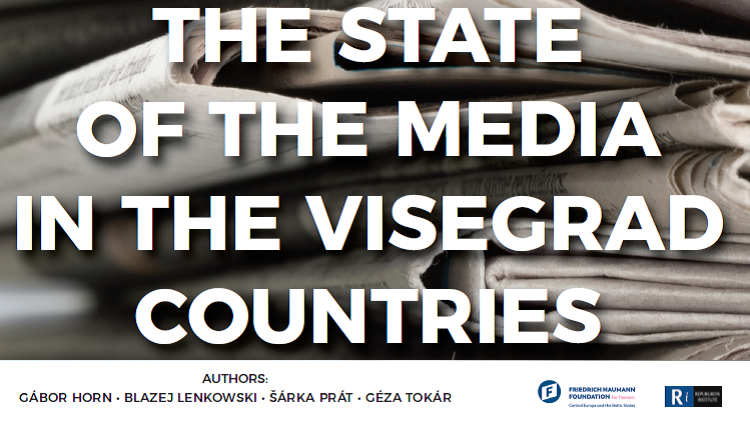
Free press and freedom of speech are among democracy’s essential prerequisites; however, they should not be taken for granted. Published by the Republikon Institute, with the support of the Friedrich Naumann Foundation for Freedom, The State of the Media in the Visegrád Countries provides a detailed insight into the media status in Central Europe.
This report represents a bi-weekly summary of arising trends in the spread of malicious information content online. Based on that, Infosecurity.sk can warn the public about emerging and current trends in the field of disinformation, manipulation, and propaganda.