

Slovak government is celebrating. A lawsuit between the state and private health insurers that has been with us for two decades now, is finally over. What does it mean for Slovak citizens?
There are relatively strict and complex state aid rules applied across the developed world. In the EU database alone, there are no less than 33,000 such cases of reported or investigated state aid cases in the last 20 years.
In Slovakia, non-monetary transfers are often forgotten due to the contributions system – this is set up so that only self-employed know, with exaggeration, how expensive it is. Most employees have no idea that the employer pays an additional 35% to their gross wage.
The introduction of the controversial 500+ program in Poland has so far resulted in no increase in fertility rate. Noteworthy, 12% of the program budget would be sufficient to eliminate extreme child poverty. Meanwhile, 100,000 women were pushed out of the labor market.
The geopolitics of cyberspace derives from the geopolitics of information and is crying now for a posture of its own, ad par with the old-time geopolitics. This paper tries to sketch some contours, overlappings and missing spots of the geopolitics of cyberspace as seen at the crossroads.
I\'m truly rooting for the bill on separating the church from the state, which was announced by Polish Initiative headed by Barbara Nowacka on Epiphany. Of course, let\'s not kid ourselves that such an initiative has any chance of succeeding in the current Polish Parliament.
Centralization, decentralization in Hungary. How to best approach the subject? How best to describe a country, which at the moment has no other long-term goal other than the consolidation and retention of power for the governing Fidesz party?
Decentralization in Poland was implemented in two stages – in 1990 and in 1999. The early reforms passed down central government tasks as well as some revenue-raising authority, giving it limited autonomy regarding real estate taxes, local fees, and other minor taxes.
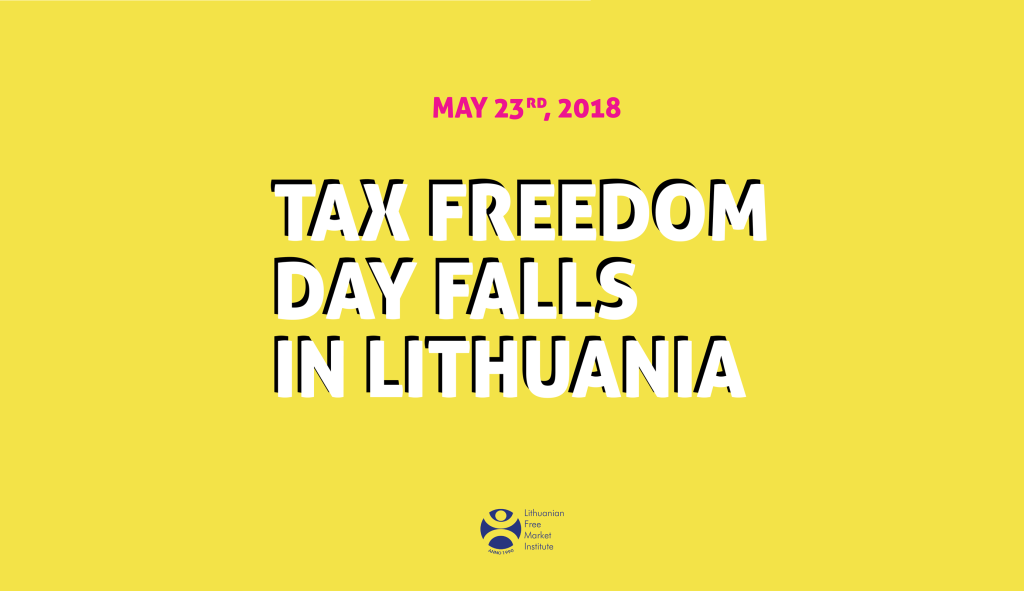
May 23, 2018 – the symbolic Tax Freedom Day, marking the day when an average taxpayer has paid all the dues to the government and begins to work for himself, falls in Lithuania. This year the Tax Freedom Day comes on the same day as in the last year, according to the Lithuanian Free Market Institute (LFMI).
On April 27, 2018, Civil Development Forum (FOR) presented The Bill for Government Services in 2017, which shows the structure of Poland’s government expenditures. Like every year, the current seventh edition of the campaign took place just before the tax filing deadline.