



The study commissioned by the Civil Development Forum (FOR) was conducted by Opinia24 between 17 and 21 March 2025 on a sample of 1,000 respondents. The sample was representative of the adult population of Poland in terms of gender, age, education and place of residence (rural areas and cities of different sizes), as well as voting preferences expressed in the 15 October 2023 election.
The purpose of the survey was:
- to check whether Poles’ views on privatization depend on the context used in the questions, i.e. how the alternative “a state-run economy vs a private economy” is framed.
- to identify social groups differentiated by gender, age, education, place of residence, income and political preferences, in which the most and least pro-privatization attitudes/opinions prevail.
We formulated four questions:
- Politicians’ influence on the economy should be limited to creating a legal framework that regulates how businesses operate.
- Politicians should have no influence over who runs companies operating on the market or what decisions those companies take.
- The economy works better when as many enterprises as possible are privately owned and as few as possible are owned by the state.
- The state controls companies such as Orlen or KGHM Polska Miedź. It would be better if they were owned only by private investors, because then they would operate more efficiently and at lower cost.
The answer scale included five options:
- two optionsindicatingan anti-privatization attitude/opinion:
-
- I strongly disagree (0 points);
-
- I rather disagree (25 points);
- oneoptionindicating an ambivalent attitude/opinion:
- It is hard to say (50 points);
- two optionsindicatinga pro-privatization attitude/opinion:
- I rather agree (75 points).
- I strongly agree (100 points).
We assumed that the highest shares of pro-privatization answers (D and E), as well as the highest intensity of pro-privatization attitudes (measured on a 0-100 scale), would appear for Questions 1 and 2, where we did not use terms such as “private ownership” or “privatization”. These words may evoke negative associations for some people, for example, accusations of “thievish privatization” have often appeared in public debate in Poland. We focused on “politicians’ influence” (rather than “the state’s influence”), because trust in politicians in Poland is rather low.
For Question 3, we expected a lower share of pro-privatization answers (D and E) and a lower intensity of pro-privatization attitudes than for Questions 1 and 2, because it explicitly contrasts “enterprises in private hands” with enterprises “owned by the state”, and for many people the “state”, treated as a “common good”, has positive connotations. We also expected the lowest values for Question 4, because a negative (anti-privatization) answer may be linked to the fact that many Poles perceive companies such as KGHM Polska Miedź or Orlen as enterprises of key, strategic importance to the state (such assessments are very common in public debate), and may therefore lean towards the view that if they are so important to the state, it is better for them to remain under its control.
Results
Analysis of Responses to Questions 1, 2, 3, and 4
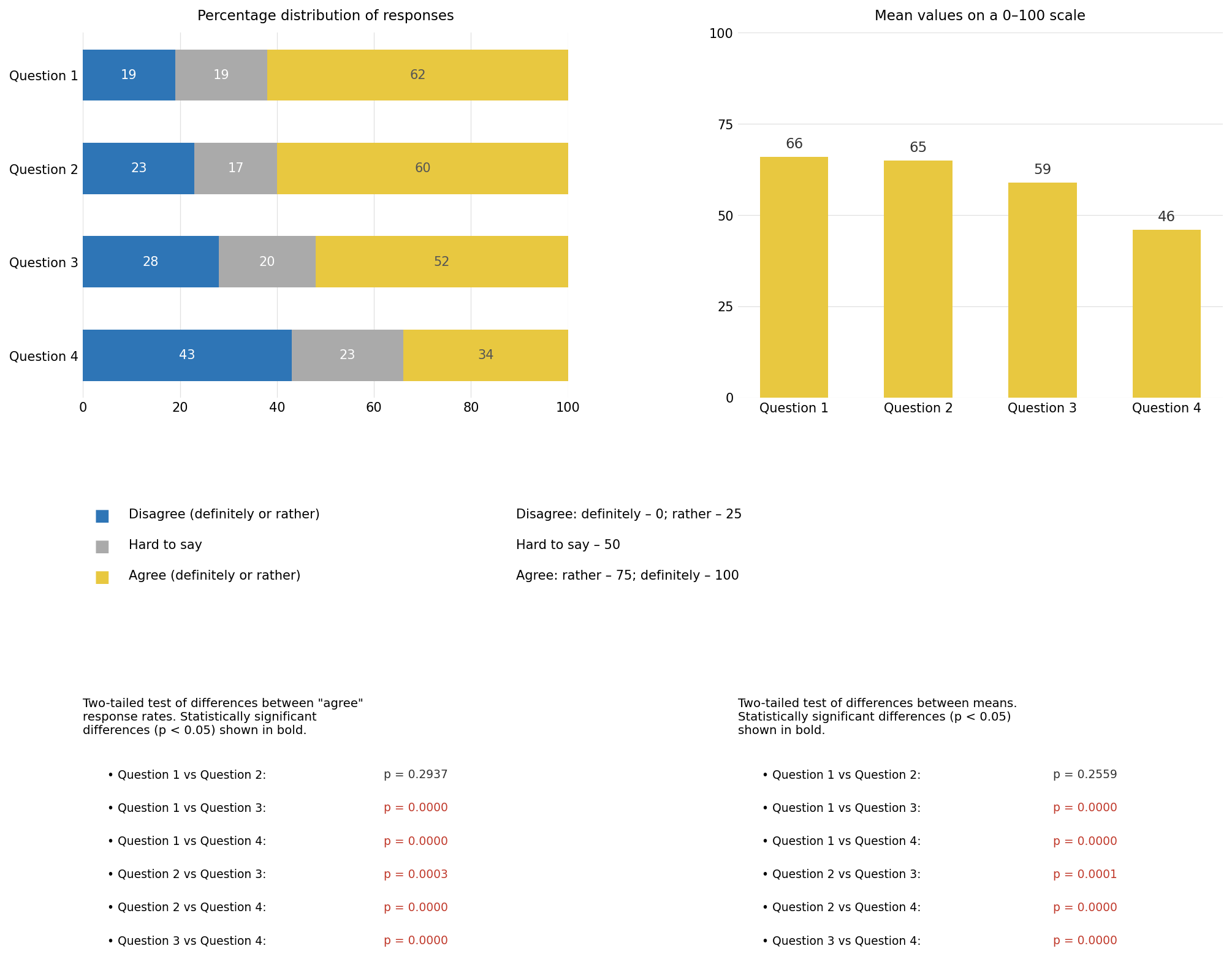
The survey confirmed that the way questions about privatization are formulated – which concepts/phrases are used and what negative or positive connotations they may trigger – affects whether the responses obtained are more or less pro-privatization (Chart 1).
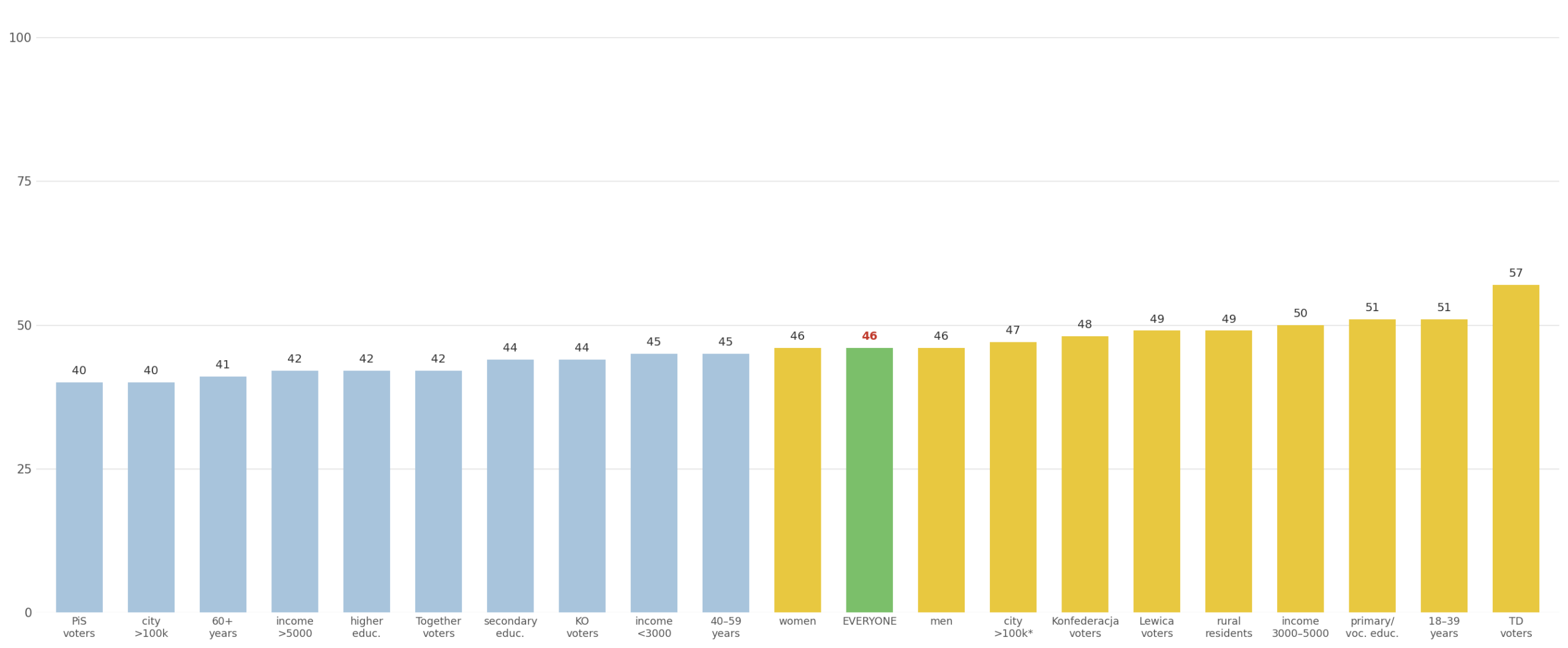
Question 4 differs from Questions 1-3 not only because respondents’ acceptance of the statement included in it is radically lower, but also because the demographic profile of the most and least pro-privatization respondents differs from that observed for Questions 1-3. In the first three questions, the most pro-privatization views were expressed by respondents with high wealth status, the best educated, residents of large cities, and older people, while the least pro-privatization views were expressed by rural residents, the youngest respondents, those with lower education, and those with low incomes. For Question 4, the picture is completely different: here, relatively the most pro-privatization views are expressed by the youngest respondents, those with lower educational status, and rural residents, while the least pro-privatization views are expressed by residents of the largest cities, high-income respondents, the better educated, and older people.
Chart 1: Do you agree that:
- Politicians’ influence on the economy should be limited to creating a legal framework that regulates how businesses operate.
- Politicians should have no influence over who runs companies operating on the market or what decisions those companies take.
- The economy works better when as many enterprises as possible are privately owned and as few as possible are owned by the state.
- The state controls companies such as Orlen or KGHM Polska Miedź. It would be better if they were owned only by private investors, because then they would operate more efficiently and at lower cost.
Pro-Privatization Attitude Index Based on Questions 1-3
The fact that, for Questions 1-3, the most pro-privatization answers were given by people/groups that, in turn, displayed the least pro-privatization attitudes when confronted with Question 4 suggests that Question 4 measures a somewhat different dimension of privatization attitudes than Questions 1-3. For these reasons, we built a composite pro-privatization attitude index based on responses to Questions 1-3. For each respondent, the index value is the average of their answers (on a 0-100 scale) to Questions 1, 2 and 3. Chart 2 presents the values of this index, from the lowest to the highest, for the groups identified in the study. Chart 3, in turn, shows how these groups differ in their answers to Question 4.
Chart 2: Ordering of groups by the pro-privatization attitude index (based on responses to Questions 1, 2 and 3).
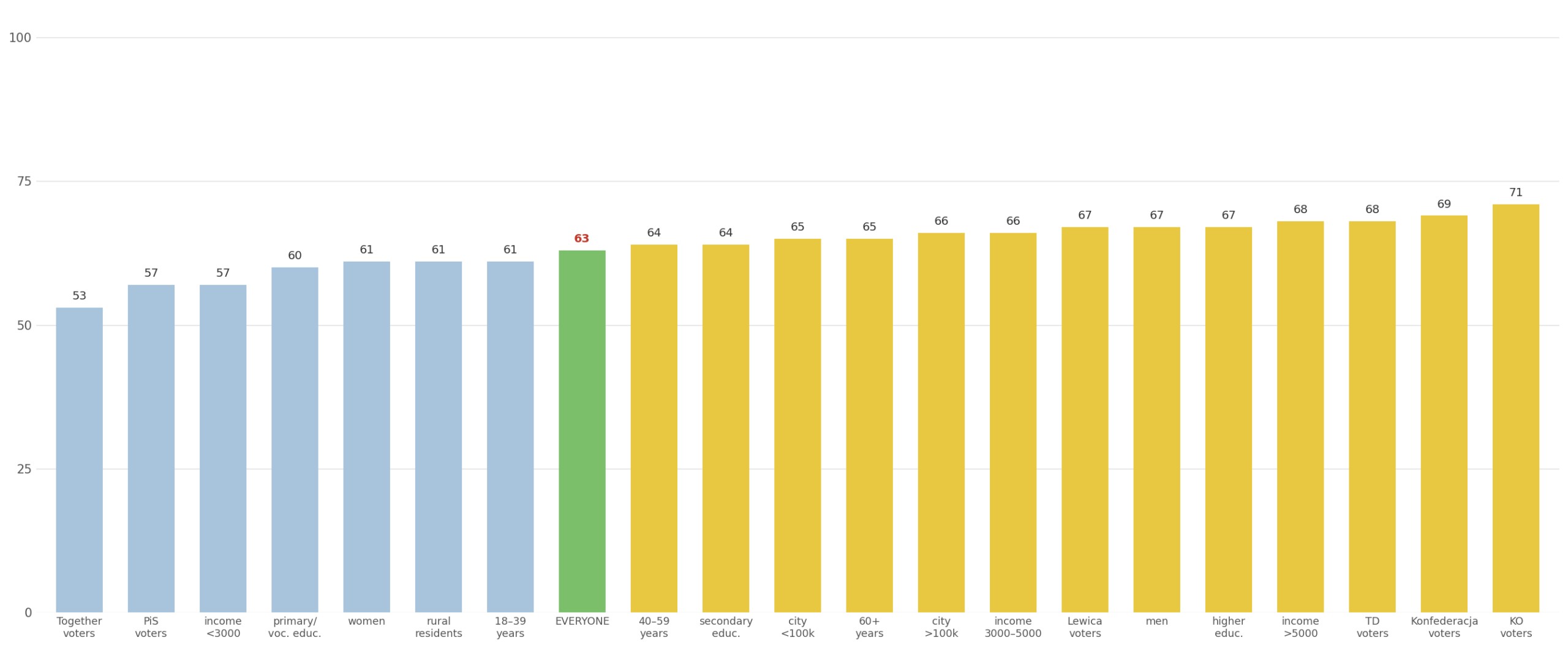
Chart 3: Ordering of groups by pro-privatization attitudes based on responses to Question 4.
Summary
The study showed that the way questions about privatization are phrased, and which terms and phrases are used, affects whether the answer obtained allows us to classify a given person’s attitude as more or less pro-privatization.
Questions in which respondents were asked to take a position on fairly general statements about a market economy based on the dominant role of private enterprises (Questions 1, 2 and 3) encouraged relatively strong pro-privatization attitudes. They were most visible for Questions 1 and 2 (mean scores of 66 and 65 on a 0-100 scale, respectively), where we contrasted freely operating market enterprises with politicians’ influence over those enterprises. They were slightly weaker for Question 3 (mean score 59), where we used the alternative “enterprises in private hands vs enterprises owned by the state”.
A significantly lower level of pro-privatization attitudes is indicated by Question 4, which directly asks what respondents consider better: KGHM Polska Miedź and Orlen under state control, or in the hands of private investors (mean score 46 on a 0-100 scale).
The pro-privatization attitude index (0-100 scale) built on responses to Questions 1, 2 and 3 indicates that the strongest pro-privatization attitudes are expressed by the wealthiest respondents (68 points), those with higher education (67), residents of large cities (65), men (67), those aged 60 and over (65), and voters of KO (71), Konfederacja (69), Third Way (68) and the Left (67). The weakest attitudes are found among the poorest respondents (57), those with primary or basic occupational education (60), respondents under 40 (61), women (61), and voters of the Together party (Razem) (53) and PiS (57).
A different picture emerges in responses to Question 4. Here, relatively the strongest pro-privatization attitudes are visible among respondents under 40 (51 points), with primary or basic occupational education (51), with net household income of PLN 3,000-5,000 per family member (50), among rural residents (49), and among voters of the Third Way (57) and, to a lesser extent, voters of Konfederacja (48). The weakest attitudes are observed among residents of cities with more than 100,000 inhabitants (40), people aged 60 and over (41), the wealthiest (42), respondents with higher education (42), and among voters of PiS (40), Razem (42) and KO (44).
When looking for reasons why better educated, wealthier, large-city residents show strong (and much stronger than less educated, poorer, rural respondents) pro-privatization attitudes when confronted with Questions 1, 2 and 3, but weak (and weaker than respondents with lower education and wealth, or rural residents) attitudes when answering Question 4, it is worth paying attention to the political context.
These respondents are, to a large extent, the electorate of the Civic Coalition (KO). The narrative directed at voters by KO politicians emphasises the importance of the political and economic transformation Poland underwent after 1989. This likely gives KO-aligned respondents a natural tendency to accept the broadly formulated statements in Questions 1-3, which reflect a positive attitude towards a free-market economy.
On the other hand, KO’s narrative seems to suggest that, in the party’s view, Poland has already dealt with the problem of privatising the economy. For many years, KO has not raised the issue of further privatization of the Polish economy at all. Likely for these reasons, disciplined or potential KO voters (i.e. better educated, wealthier, large-city residents) approach the claim that “it would be better if companies such as KGHM Polska Miedź or Orlen were owned only by private investors, because then they would operate more efficiently and at lower cost” with such strong reservations.
Written by Andrzej Machowski – PhD in psychology (psychometrics), public opinion research analyst, co-founder of the Long Table Forum Foundation and external expert at the Civil Development Forum (FOR). Since 2019, he has published his analyses and commentaries in “Gazeta Wyborcza”.