




The new agreement of Lithuania’s governing coalition includes a commitment that “people who work must not be worse off than those who do not”. According to experts at the Lithuanian Free Market Institute (LFMI), this principle is particularly relevant when assessing the unemployment insurance system. Yet in Lithuania, unemployment can still be more financially rewarding than work, especially in lower-skilled and lower-paid jobs.
The unemployment trap rate measures the financial incentive to return to work. Lithuania has the highest rate in the European Union. In 2024, the unemployment trap rate stood at 102.2%. This means that during the first months of unemployment, some lower-income people can receive more in unemployment and other social benefits than they would earn after returning to work.
LFMI presents the following example: a person earning a gross monthly salary of EUR 1,662 takes home around EUR 1,093. After leaving their job, however, they may receive around EUR 1,146 in benefits during each of the first three months. This is because a person who is not working may receive not only unemployment benefit but also other forms of social support, such as EUR 233 in rent compensation.
According to LFMI President Elena Leontjeva, such a system distorts the purpose of unemployment insurance.
“Unemployment insurance in Lithuania is increasingly turning into a means of encouraging unemployment. Its purpose should be to help people who lose their jobs unexpectedly, not to create opportunities for a planned exit from the labor market. When the number of vacancies is increasing but unemployment remains high, we must ask whether the system itself provides people with sufficient incentive to work,” said Leontjeva.
According to her, it is particularly worrying that taking a holiday at society’s expense is becoming socially acceptable and even fashionable.
“We work extensively with schoolchildren and teachers, promoting awareness and a sense of responsibility, so it is especially painful to see young people beginning to regard financial literacy as the ability to take advantage of the various opportunities provided by the state. We also have to speak with parents who say that their children see holidays at society’s expense as a normal choice: my friends have already done it, while I am the only one who has to work this summer,” said Leontjeva.
LFMI expert Edas Matulaitis pointed to a paradox in Lithuania’s labor market: the number of vacancies is growing rapidly, yet unemployment remains high.
“Over the past five years, the number of job vacancies in Lithuania has increased by 57%, yet the unemployment rate remains around 7%. Meanwhile, Poland’s unemployment rate stands at 3.1% – less than half as high. One reason for this difference is the unemployment trap: in Lithuania, it exceeds 100%, while in Poland it stands at around 60%,” said Matulaitis.
According to him, amendments to the Law on Unemployment Insurance that take effect on 1 July do not fundamentally address the unemployment trap, while the changes to the qualifying employment period are positive but modest.
From now on, a person will need 12 months of employment during the previous 24 months, rather than 30, to qualify for unemployment benefit. Periods during which they previously received unemployment benefit will no longer count towards this qualifying period. Until now, a person could receive unemployment benefit for nine months, have that period counted towards the qualifying period, work for three months and then apply for the benefit again.
“This is a positive change because it makes repeated use of the system more difficult. Nevertheless, the structure of benefits during the first months of unemployment is not changing significantly. For lower-income people, benefits will remain similar, while employees earning around 1,5 times the average wage will receive around 20% more. The effect on the unemployment trap will therefore be very limited,” said Matulaitis.
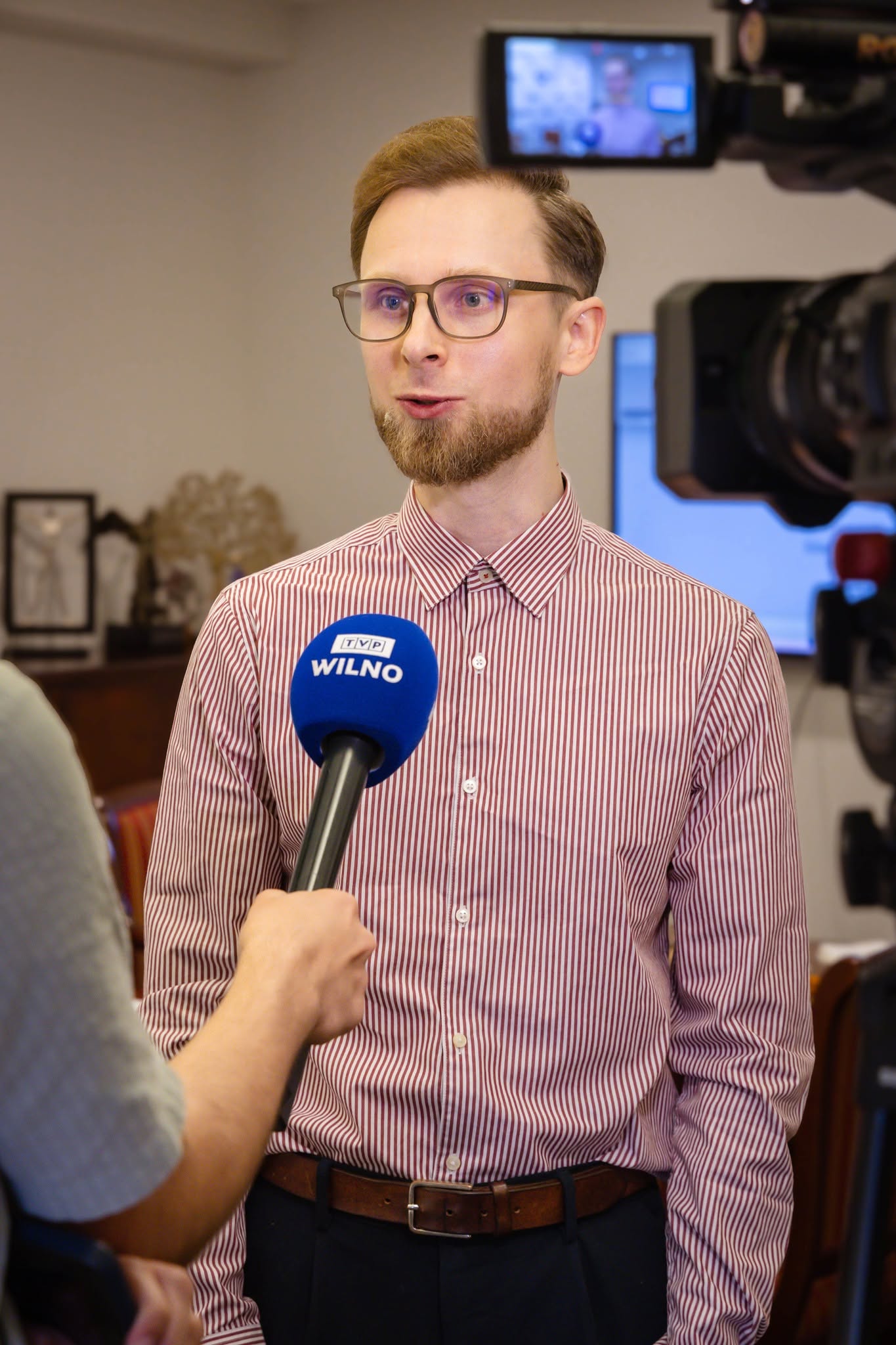
LFMI senior expert Ernestas Einoris emphasized that incentives within the unemployment insurance system matter not only for the labor market but also for public finances.
In 2025, EUR 542 million was paid out in unemployment benefits in Lithuania – around 0.64% of GDP. This was almost as much as the amount allocated to road construction. According to Einoris, unemployment insurance was the only branch of social insurance to run a deficit: more was paid out in benefits than was collected in contributions.
“The unemployment insurance system must operate as insurance, not as a way to rely on benefits as a planned source of income. For example, a person who has worked for a year on the minimum wage pays around EUR 181 into the unemployment insurance fund but can later receive EUR 5,188 in benefits. That is more than 28 times the amount they paid in contributions. This ratio shows that the system lacks safeguards,” said Einoris.
In LFMI’s assessment, one of the key problems is that people in Lithuania can receive unemployment benefit even after leaving their jobs voluntarily. In many European countries, benefit payments in such cases are either deferred for several months or not paid at all. In Poland, for example, payment of benefits to someone who leaves their job voluntarily is deferred for 90 days.
“Such an arrangement would help prevent precisely those cases involving abuse of unemployment insurance while maintaining assistance for people who lose their jobs unexpectedly and genuinely need this support,” said Leontjeva.
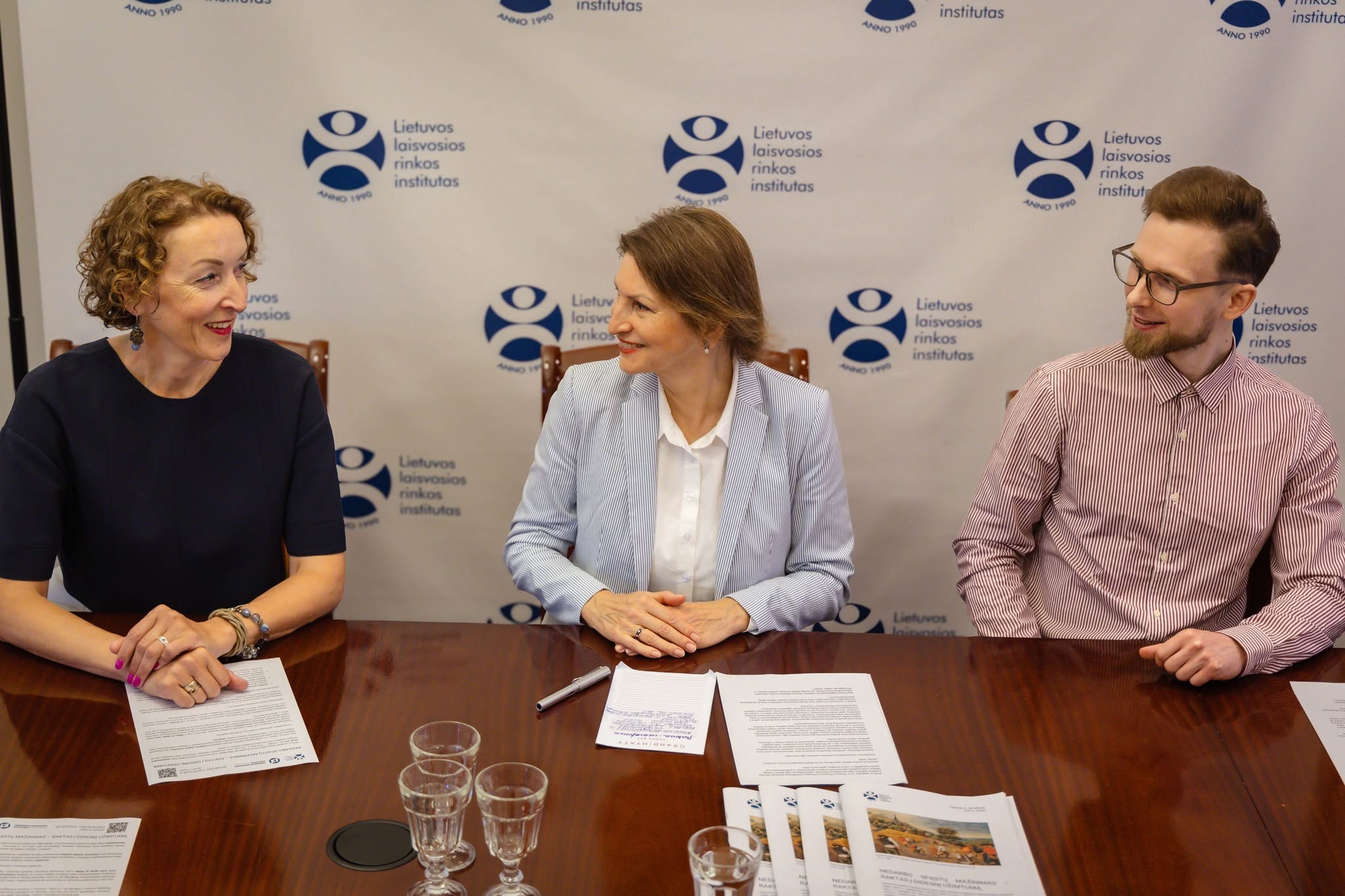
Daiva Macijauskė, a representative of the Lithuanian Confederation of Industrialists, said that LFMI’s proposals could strengthen incentives to work and liberalize employment relationships.
“We support the Lithuanian Free Market Institute’s proposals to liberalize the use of fixed-term employment contracts. At present, fixed-term contracts can account for only 20% of employment contracts for work of a permanent nature in a company, which particularly limits the ability of small and medium-sized enterprises to hire employees more flexibly,” said Macijauskė.
According to her, it is also important to consider restricting benefit payments to people who leave their jobs voluntarily without a valid reason.
“Lithuanian industry is also suffering as a result of the current situation: the number of job vacancies is growing, but some people choose benefits instead of improving their skills, creating added value and returning to the labor market,” said Macijauskė.
LFMI proposes three policy directions for reducing Lithuania’s unemployment rate: restricting unemployment benefits for people who leave their jobs voluntarily, revising the benefit calculation formula for the first months of unemployment, and liberalizing the use of fixed-term employment contracts. A more flexible system would strike a better balance between social protection and incentives to work, while fixed-term contracts could serve as a stepping stone to long-term employment.
In the Institute’s assessment, unemployment insurance should act as a financial cushion for people who lose their jobs unexpectedly while also maintaining a clear incentive to return to the labor market. Work must always pay – this is essential both for individual independence and for the country’s economic growth.
Read the full study: https://llri.lt/nedarbo-spastu-mazinimas-raktas-i-didesni-uzimtuma/