Recently, a Slovakian newspaper published a commentary about tighter regulation in the healthcare sector. The question remains what exactly does he mean by the word \"tighter regulation\"?
Slovak Prime Minister Robert Fico said at Davos that Slovakia could become a country that will experiment with a four-day working week. It is a flattering topic and so several media immediately picked up on it.
For two weeks now, Fidesz has completely lost control of the Hungarian political discourse, something that has not been seen for a long time, especially to this extent.
The most controversial Hungarian story in recent memory includes the resignation of Hungary’s President and a former Minister of Justice, a presidential pardon for an accomplice in a pedophilia crime, and, as it turns out, the leader of the Hungarian Reformed Church. It recently came to light that in 2022 Katalin Novák pardoned a man, who was convicted of coercion while aiding a pedophile in covering up his crimes.
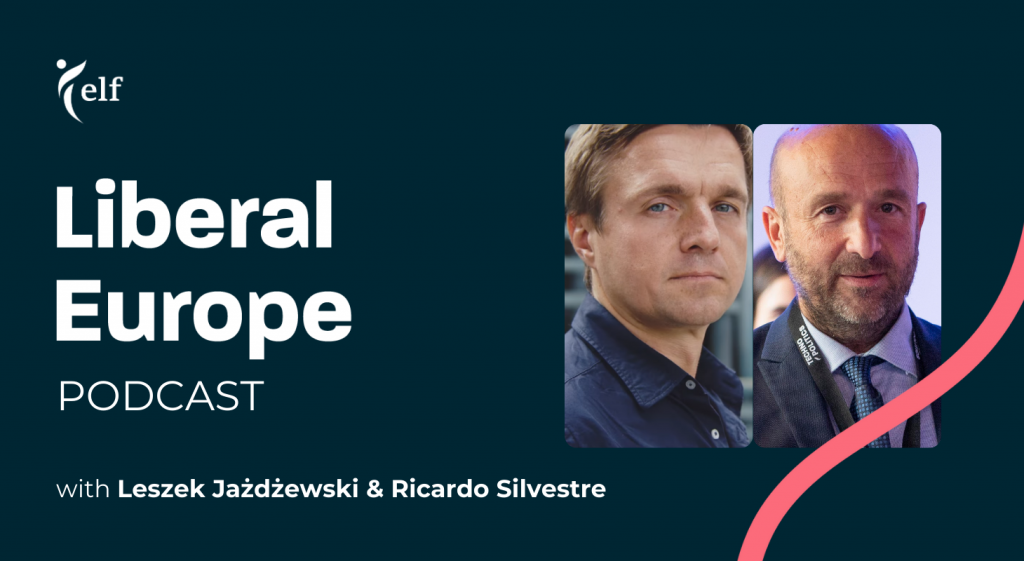
Why do the recent election results in Poland, the Netherlands, and Spain matter? What do they mean for Europe? And what is to be expected of the forthcoming elections in Portugal and the European elections? We are starting the new season of the Liberal Europe Podcast with a thought-provoking conversation between our two hosts, Ricardo Silvestre (Movimento Liberal Social) and Leszek Jazdzewski (Fundacja Liberte!).
It is telling that the public almost unquestioningly believes that the minimum wage helps low-income people in particular. But as the prominent Czech economist Robert Holman writes in his textbook on microeconomics, \"If economists agree on anything, it is that legislating a minimum wage increases unemployment.\"
Advertisements are generally regarded as a socially undesirable phenomenon. At best, they are seen as a poor source of information about a company\'s products in an attempt to raise awareness of their existence and thereby win new customers, but more often as a despicable practice aimed at manipulating consumer preferences.
Why are expectations about the impact of government regulation so often not met? Why do the actual consequences of government interventions diverge countless times from the intentions of the politicians who promote them? Economics has elegant answers to these stimulating questions. One of them will be illustrated and explained in this article.
Following the publication of the Sino-Georgian strategic cooperation statement, discussions on the ups and downs of this document have become a focal point in the Georgian media. This is not surprising since the issue concerns one of the largest and most ambitious states in the world, and its foreign policy moves are constantly at the center of attention.
The December issue of the 4liberty.eu Newsletter provides an overview of the articles published on the 4liberty.eu website, serving as a starting point for further exploration.